
Do Italians Eat Pasta Every Day?
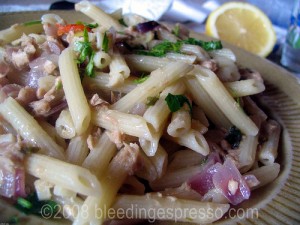 One question I get from many people is whether Italians eat pasta every day. Of course answering such a question would require an enormous generalization, so I’m going to give you the experience in my house, which consists of a Calabrian and an American with Italian, Lithuanian, and German blood.
Do we eat pasta every day?
Pretty much, yes. Usually either lunch or dinner — but hardly ever both — contains some kind of pasta for us.
I’m sure for some of you the thought of eating pasta every day sounds boring, and you’re positive you’d get sick of it within a week or so. This actually did cross my mind as I considered moving here — would I just get sick of eating pasta? And if so, then what would I do?
Well, seven years in, and I’m still having some pasta on most days. Don’t get me wrong; there are days when I just don’t want pasta. So I don’t eat it, easy peasy.
 “Pasta” Does Not Equal Spaghetti and Meatballs
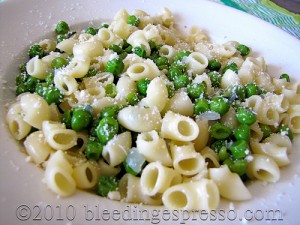
One important thing to remember is that Italians don’t eat pasta with “red sauce” and meatballs every day; in fact, the rumors you’ve heard about Italians not eating “spaghetti and meatballs” are true; if there are meatballs, they are often huge and served after the pasta course, so you’ll have one, *maybe* two at the most.
That “red sauce” is often a ragù, made with meat (often pork and for us, rabbit or chicken); in our house, that’s probably a once every two weeks kind of dish, often on a weekend.
Also? Italians don’t just eat spaghetti. As I’m sure you know, pasta comes in all shapes and sizes, and part of the fun is matching what kind of sauce or accompaniment best suits a certain kind of pasta, so there’s a lot more than spaghetti going on around here.
So what else are we eating with pasta? Well I have a list of recipes to give you some ideas, and you’ll see everything from tuna (with or without tomatoes) to broccoli (no tomatoes) to ricotta fresca to fresh tomatoes and basil to prawns. We eat pasta cold in a salad in the summer and hot in minestrone in the winter — and with legumes like peas, ceci, and lentils year round.
Pasta is very versatile, and as always, I do encourage you to experiment.
But Pasta Makes You Fat!
Another misconception regarding pasta is that some people believe that if they ate pasta every day, they’d be the size of a house. The answer to that is, well, it depends on how much pasta you eat and what you’re eating with it.
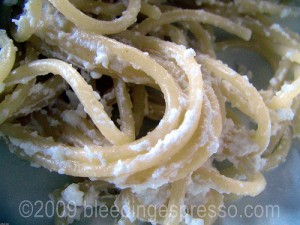 Pasta and carbohydrates have gotten a bad rap in health circles, but you *do* need them in your diet — in moderation, just like everything else that helps your body function the way it should.
Italians seem to know instinctively that 100-200 grams of pasta a day falls well within the recommended daily allowances of carbs. You just have to not load up on carbs the rest of the day in order to keep a good balance.
Other health issues like diabetes may cause concern with carbs, but if you’re an otherwise healthy person, eating a bit of pasta a day is one of the common features of the Mediterranean Diet, which we know can offer great health benefits — but know that is not a “diet” as the word has come to be understood. It is a way of life.
Yeah, I’m Still Not Buying that I Could Eat Pasta Every Day and Not Get Sick of It
If you still can’t imagine eating pasta every day, think of it this way: do you eat bread every day? Many people do, in one form or another. Well you can think of pasta as our bread. It accompanies other ingredients and isn’t really the “point” of the meal — although it’s still an important part to be sure (see the discussion of matching pasta with sauce above).
Note also that Italians will generally *not* eat bread and pasta together, so don’t be surprised if you’re in an Italian restaurant and they swipe any bread off the table just as the pasta is served.
But hey, we’re not all created the same, so it very well may be that you would get bored with an Italian diet and with eating pasta every day. So why not come over here and find out?
How often do you eat pasta?
Enrich Your Italian Vacation with Milano Summer School
Would you like to learn more about Italian history, culture, opera, or fashion while on vacation here in the Bel Paese?
Read on for more information from Alexandra of the Milano Summer School.
—————
 Milan is the beating economic heart of Italy, and home to a number of the country’s most prestigious study institutions – Bocconi University for economics, Domus Academy for design and architecture and Istituto Moda Burgo for one of the city’s most famous exports, fashion. And this summer, from June 14th to August 7th, these institutions are opening their doors to students and culture fans alike from all over the world.
The event, co-ordinated by the newly founded Milano Summer School, is a world first. Whether you fancy lessons in opera at La Scala Theatre, or workshops on International Relations, there is a summer course to meet every need and most of the big institutions are getting involved.
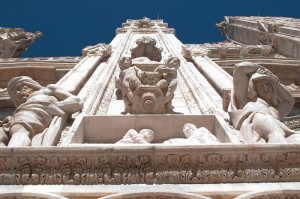 The courses generally last one or two weeks, and you can choose from a range of themes including Fashion, Design, Theatre, Music, Art, Italian Culture and Language, Artistry, Tourism, International Relations, Medicine and Surgery, and Italian for Foreigners.
The course organisation will also help visitors to find accommodation in the city and will implement a programme of social events so that participants on the various courses can interact and feel part of a larger summer school community.
There are a number of useful links you can have a look at to find out more:
- Milano Summer School
- VisitMilano.it and Turismo.milano.it for tourist information about Milan
- The current issue of Néo News online magazine, which is dedicated to the Milano Summer School
If you’re looking for a novel way to visit Italy this summer and learn more about the rich culture of the Bel Paese, this might just be it!
—————
Thanks so much Alexandra!
If you have questions, please get in touch with Milano Summer School,
and in any event, have a great summer!
Three Hens, a Bantam Rooster, and Double Yolk Eggs
Some of you know we have some fowl (hah!) stuff going down around here — and now that includes double yolk eggs, which you can read more about below. First, here’s a quick peek into the coop.
In addition to several pulcini (chicks) and chickens (kept separately), we also have three hens (including one bantam) and a bantam rooster who roam around the garden and scare the bejeebers out of the dogs, especially poor Luna.
Three hens that lay one egg a day are plenty for us; once they get into their rhythm, we’ll probably even have extra to give away and/or sell over the summer. The tourists who come to the village love farm fresh eggs, and who can blame them?
The little golden one on the left is a bantam hen and the partner to the bantam rooster; I’m not sure what breed the black hens are.
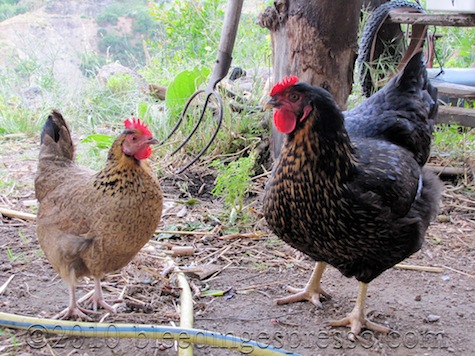

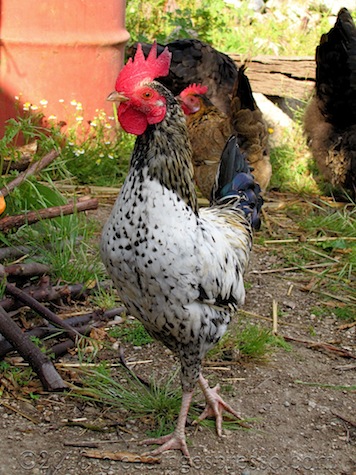
So, with the warmer temperatures, egg-laying is now kicking into full gear and the girls are really starting to produce. Did you know that sometimes as hens’ cycles are getting regulated, they may do things like lay strange eggs? One of our hens has been doing this:
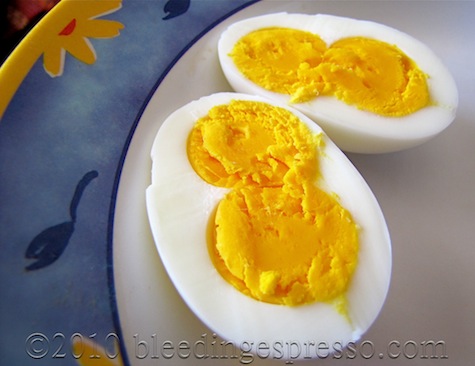
Laying double yolk eggs may also be a genetic trait. I suppose time will tell with ours, but all I can say is that it’s pretty awesome to whip up a frittata using just three eggs because they each have two “rossi” (as they’re called in Italian) in the middle.
And that’s no yolk!
Hahahahaha…ahem.
What’s your favorite way to enjoy eggs?
If you’re ever stuck for ideas, remember I have an egg section on the recipes page!
Benefits of Chamomile: Prenditi una camomilla!
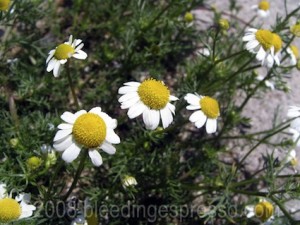 “Prenditi una camomilla!” is a common Italian expression that literally means “Have yourself a chamomile tea!” but it’s the colloquial equivalent of “Chill out!” or “Take a chill pill!” if you prefer.
There’s even a Facebook group dedicated to this phrase, which happens to be one of my absolute favorites in the Italian language.
More literally, though, many Italians also suggest chamomile tea as a general home remedy for just about any ailment, including insomnia.
Although I love other herbal teas, I’m actually not a huge fan of drinking chamomile; I do, however, *love* the little flowers it comes from.
Maybe you’ve seen them growing wild somewhere?
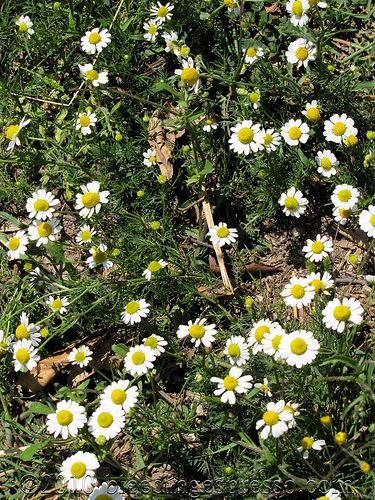
As you can see, they look like little daisies (in fact, they’re from the daisy family), and they are literally everywhere in the spring in Calabria. You may know the plant as Roman chamomile, English chamomile, garden chamomile, and various other names.
Did you know even Shakespeare knew chamomile, writing that “The more it is trodden on, the faster it grows” in Henry IV?
In our garden, chamomile grows wild, lining the walkway, shown here with the dogs nearby so you can see just how tiny the flowers are:
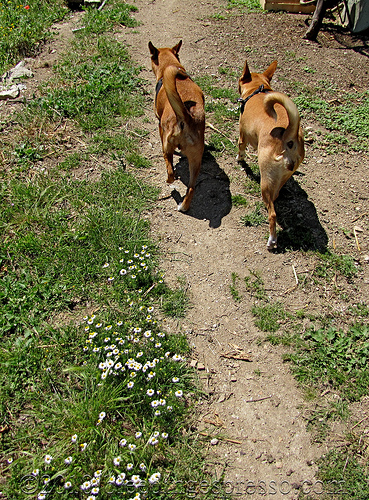
To be honest I didn’t even notice these little flowers in Calabria until one day I saw an older gentleman picking them on the side of the road; only then did I realize they must have some use — Calabrians often focus on the utility of plants and flowers, not always their beauty.
Once you’re close to the chamomile, though, the unique scent will tell you what the flowers are. Che profumo!
More Health Benefits of Chamomile
Chamomile does a lot more than just calm your nerves, too; it can also act as an anti-inflammatory, which means it can ease indigestion, other digestive issues, canker sores, conjunctivitis, menstrual cramps, eczema, hemorrhoids, migraines, and more.
For a full list as well as precautions for using chamomile, check out the Chamomile Fact Sheet at About.com.
Are you a chamomile fan?
My Fellow Americans, Happy Memorial Day!
Just a quick post to wish my fellow Americans a Happy Memorial Day as we remember our veterans and all they’ve sacrificed for us.
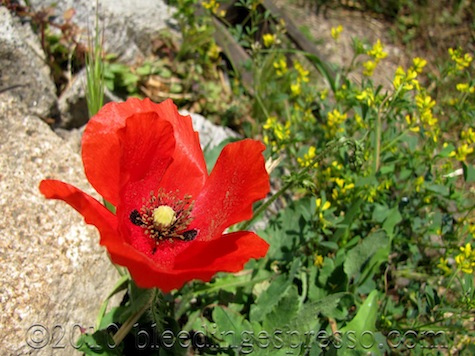
And now it’s time for me to step away from the computer for a bit as I regroup, take some photos, scratch some goatie faces, walk with the pooches, hang out in the campagna, and get psyched up for a busy summer ahead. Woohoo!
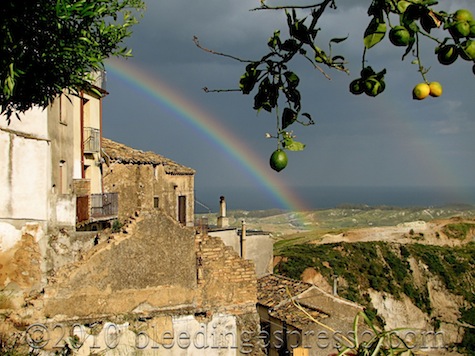
What do you have planned for the summer?
 Michelle Kaminsky is an American attorney-turned-freelance writer who lived in her family's ancestral village in Calabria, Italy for 15 years. This blog is now archived.
Calabria Guidebook
Recipes


