
Top Ten Signs You’re Addicted to Nutella
***Be sure to check out NutellaDay.com for the most up-to-date info!***
 World Nutella Day is *tomorrow*, so I hope your Nutella posts are being polished! If you need some ideas, be sure to check out today’s post at Ms Adventures in Italy: Nutella Virgin? 50 Ways to Eat Nutella and Nutella Lover Types!
In lieu of a traditional What’s Cooking Wednesday this week, I’m celebrating Nutella for *two* days, and hopefully you’ll be inspired to whip something up for tomorrow by:
The Top Ten Signs You’re Addicted to Nutella
10. When your significant other asks if you want to spoon, you say “Sure!” and reach for the Nutella jar.
9. Your drinking glasses consist entirely of old Nutella containers.
8. You’ve never looked at the caloric content of Nutella and don’t plan on doing so.
7. Your afternoon snack is Nutella hot chocolate, Nutella on bread, and a chaser of a few spoonfuls of Nutella straight from the jar.
6. When invited to someone’s house, your only question is, “Will there be Nutella?”
5. Some people see things as they are and ask, “Why?” You dream of things that never were and ask, “Why not with Nutella?”
4.You’ve never met any food item that didn’t pair well with Nutella.
3. You carry around small snack packets of Nutella with you at all times in case you need a hit.
2.When faced with moral dilemmas, you ask “What would Nutella do?”
And the number one sign you’re a Nutella addict:
1. You have written to President Obama begging him to change his famous line to “We will extend a hand if you are willing to pass the Nutella jar.”
Be sure to check out the rules for participation in World Nutella Day here–we’re looking forward to lots of fabulous entries!
Discovering the Secret of Happiness
 While flipping through the latest issue of Psychologies, I came across a little blurb entitled “La felicità è contagiosa.”
Happiness is contagious.
The piece quotes a study published in the British Medical Journal, which found that the secret to happiness is to be around calm people who are satisfied with their lives.
I think we all kind of knew this, right?
I know I don’t like to be around negative nellies too much, because I find that unhappiness is also quite contagious.
But the article goes on to say that while “happy” areas in our brain are stimulated by being around happiness, this connection only happens in person and not via telefone or the Internet.
Accordingly, the author concludes, all you need to do to be happy is to shut off your computer, get out of the house, and talk to people (apparently preferably happy ones).
I’ll agree that there certainly is something extra-special about in-person contact, but I’m not sure that I don’t get at least similar happy feelings talking on the phone or via Internet with loved ones who also happen to be happy. Or maybe my brain is just different than those in the study?
What do you think?
Do online and telephone friendships
with positive people help make you happy?
The Logic of Italian Boys’ Names
For as long as I can remember, I gave my furry friends nicknames based on their real names.
- My dog Maverick became Maverickaronyravydoodlenoodlebug, which then became Doodlebug or simply The Doodle.
- My cat Kudzu became Kudzucchini (sometimes followed by Big Fat Weenie, but the poor thing doesn’t deserve to have *that* posted on the Internet).
Now I have Luna, aka Luna Balloona aka Luna Baboopa aka Boopers aka The Boop.
Stella? A similar pattern. Stella Bella aka Stella Bellamoopers aka The Moop.
So yes, I often call my girls, who are so *not* excited by the gorgeous view behind them and only want to be untied so they can run freeeeeee, (right to left),
The Moop and The Boop:
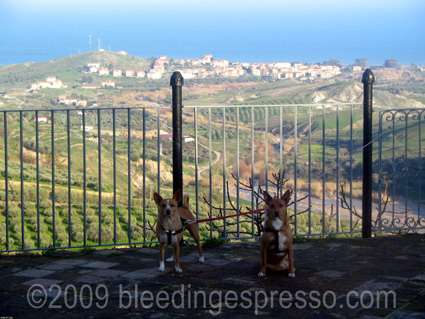
Little did I know that this fascination with changing real names into something somehow related and yet not was actually in my blood.
You see, here in Calabria, most guys are named one of, oh, ten or so names. And yet they go by all different versions of those names, so for us non-natives, if someone is suddenly called by their real name, it can get confusing.
Here are, from my perspective:
- The Top 7 Most Common Male Names in Calabria
and Some of Their Related Nicknames:
1. Antonio: Tonino, Toni, Totò, Nino, Antò
2. Domenico: Mimmo, Mico
3. Francesco: Checco (KEH-koh), Ciccio (CHEE-choh)
4. Giuseppe: Peppe, Pino, Pinuccio (pee-NEWCH-oh) (not Pinocchio!)
5. Pasquale: Pasqualino, Pascal, Pascala
6. Salvatore: Salvo, Turi
7. Vincenzo: Vincenzino, Cenzo (CHEN-zoh), Enzo, Cece (cheh-CHEH)
Note that although these names are spread throughout Italy, nicknames often differ by region, so do check with a local before trying to show off your nickname knowledge. And also note that this is completely separate from the sopranome system.
And in case you’re wondering about my P?
Well for his Paolo, he doesn’t like to be called anything but Paolo, but sometimes the older generations call him “Paolino” or, *very* local to us as it’s only used in this town, maybe one or two others, Paolehru (powl-EHR-oo). How cute is that?
Do you do nicknames?
Buon weekend!
Love Thursday: Almond Blossoms & Calabrian Proverbs on Love
As has become tradition, P brought me our first almond blossom of the year last Thursday (yes, on Love Thursday and everything!):
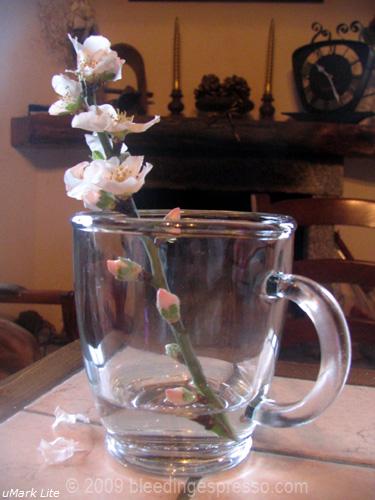
And now, since I’m in a loverly mood, a few Calabrian proverbs on relationships, love, and the like:
- A carni supra all’ossu mera.
Meat on the bones adorns.
The book I found these in expands (my translation): “The concept of traditional feminine beauty isn’t lean and long-limbed, which came from the style of America after World War II . . . . According to the Calabrese tradition, a beautiful woman must also be robust, with roundness and feminine features well-accentuated.”
Gotta love the Calabrese!
- Ama l’omu toi cu i vizii soi.
Love your man with all his faults.
I think this is a good one for everyone, don’t you? If you truly choose to love someone (I’m a big believer that love is a choice), you love everything about them even if some things frustrate the hell out of you sometimes. Ahem.
- A megghju palora esta chija chi no nesci.
The best words are those that never leave the mouth.
This last one isn’t specified for love, but I think this can be good advice in relationships. Yes, I believe in honesty and openness, but not every thought needs expression.
What do you think about these lovely proverbs?
Happy Love Thursday everyone!
What’s Cooking Wednesday: Carciofi/Artichokes
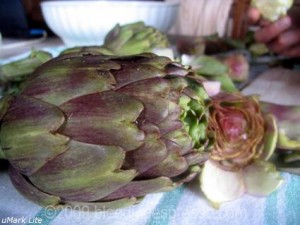 One of my favorite food discoveries here in southern Italy has been the artichoke. Yes, I had eaten them a few times in the States, but, while tasty enough, they just weren’t something I sought out.
Now I very much look forward to artichokes appearing at the market, which they are starting to do now, and I’d like to tell you about them for this week’s What’s Cooking Wednesday.
These flowers of a silvery-leafed plant can be quite a bit of work depending on how you prepare them, but before we get to my favorite artichoke recipe, let’s talk more about the ‘chokes.
 History of Artichokes
Carciofi originated in Sicily, where they grow wild, as they do in Calabria, and *wow* are those good!
In the 15th century, Napolitans cultivated them, and artichokes soon made their way to the Medici dinner table in Florence, where they were an instant favorite.
Choosing, Buying, and Storing Artichokes
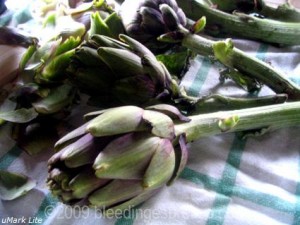
You want artichokes that have tightly packed leaves and healthy, colorful tips–if they’re browning, that ‘choke is on its way out. If you can get them still attached to the stem, do so, as they’ll stay fresh longer (you can also peel, cook, and eat the stems as well).
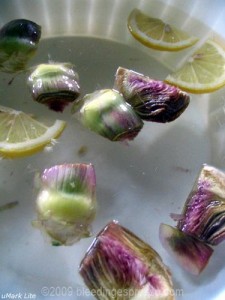
To store artichokes with stems, put them in a vase with water like a flower arrangement–move over Martha Stewart! Look at my Artichoke Centerpiece!
If you can’t get them with stems, wrap the artichokes in plastic wrap and keep them in your crisper. They should last a couple days, but do try to use them as quickly as possible.
 Cleaning Artichokes
Regardless of how you’ll cook them, the procedure for cleaning artichokes is the same. Snap off the stalk and tear off tough, outer leaves. Rub them with lemon to avoid discoloration and/or put them in a bowl with lemon slices.
You’ll then have to boil them, either whole or in wedges for about 30 minutes for large artichokes or 15 minutes or so for smaller ones.
Be sure to remove the hairy choke inside before serving or stuffing.
Artichoke Recipes
Artichokes can be eaten raw (the tiny, tender ones), braised with olive oil, parsley, and garlic, or stuffed with any number of fillings.
My favorite?
A great dish typical of Calabria that starts with the braising as described above and incorporates eggs, breadcrumbs, and lots of grated parmesan cheese:
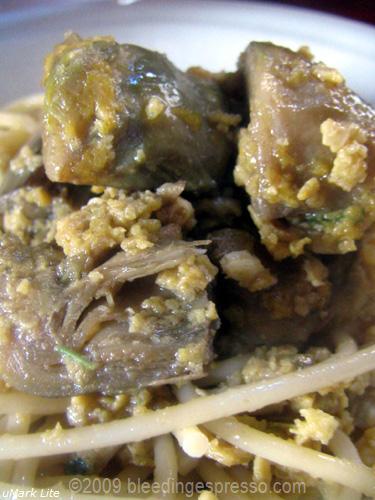
I’ve given you the recipe before for Pasta with Artichokes and Eggs, but you might have missed it, and I promise you, it’s too good to miss. It’s one of my all time favorite Calabrian dishes.
Do you like artichokes?
How do you prepare them?
 Michelle Kaminsky is an American attorney-turned-freelance writer who lived in her family's ancestral village in Calabria, Italy for 15 years. This blog is now archived.
Calabria Guidebook
Recipes


