
Archive for the ‘for a good cause’ Category
Happy Christmas (War is Over)
Wishing everyone who celebrates a wonderful Christmas season full of love, joy, and, most of all, peace.
Download your own WAR IS OVER! (If You Want It!) poster in your language now.
Please Help a Calabrian Dog Get to America!
**UPDATED: Dino is scheduled to fly to America on November 22nd — thanks so much to all who helped! Remember you can keep up with Dino at his site Sponsor Dino.**
Put anything fuzzy or furry or feathered in front of me, and I’ll want to cuddle it — especially if it’s a dog (or a goat). And I know many of you are the same way. Needless to say, when I got an email several months ago about a Calabrian dog named Dino who needed a home, it really tugged at my heartstrings.
I would have *loved* to have taken in Dino, but as we already have two dogs, a cat, goats, rabbits, and a menagerie of flying creatures (hens, roosters, ducks), I just couldn’t do it. If you follow me @michellefabio on Twitter or the blog on Facebook, you’ve already heard a bit about Dino as I pleaded for help from anyone who might adopt him, but finally there’s some good news — he has a chance to stay with the couple who have fallen in love with him!
Except they’re moving back to America, and Dino needs a ticket to his new home — which costs 1400 euros. And this is where you come in. First take a look at this face:
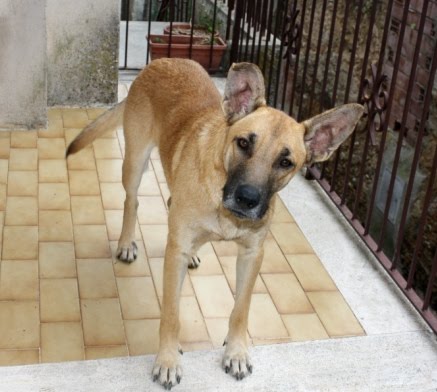
Wouldn't I look adorable with a Stars and Stripes bandana?
Now tell me you’d be able to sleep at night knowing that he could end up back in a crowded, flea- and disease-infested kennel without anyone to give him the love and attention he so very much deserves.
You couldn’t, could you?
Please consider donating whatever you can to help Dino get to America to his new home. I know there are so many causes and so many awesome charities that could use your money, but check this out — right now there are 1,362 Bleeding Espresso “likers” on Facebook — if each of you only gave 1 euro (about $1.40 as of this writing), Dino would be as good as home! Let’s make this happen!
Dino so deserves it after all he’s been through.
For more information on Dino and how you can help, check out Sponsor Dino…and spread the word!
LGBTQ Spirit Day: Wear Purple and Say No to Hate
Today, October 20th has been designated as LGBTQ Spirit Day in remembrance of the six young boys who committed suicide in recent weeks because of gay bullying.
There are several Facebook groups related to the event including Wear Purple Day and R.I.P.: In memory of the recent suicides due to gay abuse, wear purple, but even if you don’t wear purple or join any FB groups, please watch this video:
From the Human Rights Campaign:
In just the last few weeks since school started again, too many teenagers have taken their own lives following bullying and harassment because of their perceived sexual orientation or gender identity.
How many more young lives will be lost before schools act?
Ask Secretary of Education Arne Duncan: Include gender identity and sexual orientation in anti-bullying programs. Sign the petition now.
Also consider becoming involved with The Trevor Project, the leading national organization focused on crisis and suicide prevention efforts among lesbian, gay, bisexual, transgender and questioning (LGBTQ) youth.
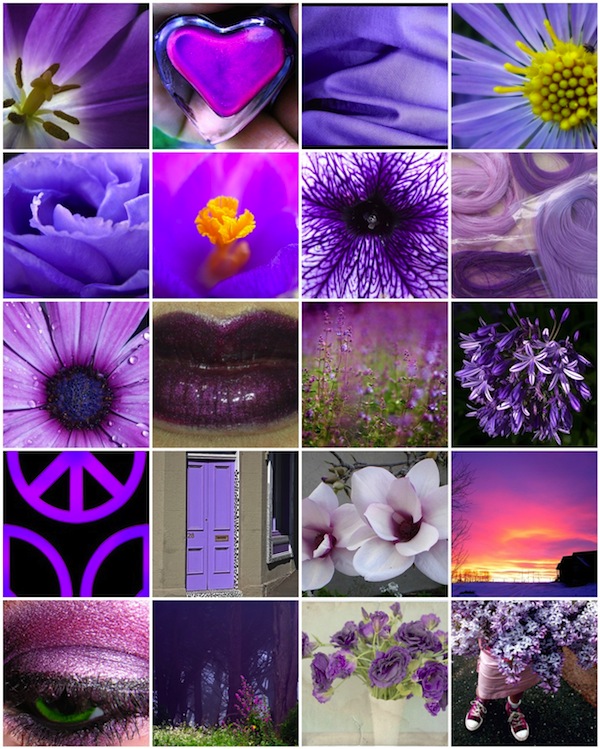
1. embrace the purple, 2. I Heart Flickr Pink Purple Nail Polish in Heart Bottle Creative Commons, 3. Purple Fabric, 4. Purple Aster Macro, 5. Purple Rose, 6. A Purple Spring Flower, 7. Purple Hole, 8. Purple Saran, 9. Purple Daisy Supper Cropped, 10. purple lippie, 11. Purple Field, 12. Australian purple agapanthus Canberra, 13. Purple Peace Seamless Tile, 14. Purple door, 15. Purple Flowers, 16. purple base, 17. macro green eye with purple m.a.c. and ben nye eyeshadow, 18. Purple Grove, 19. Purple Flowers, 20. Free Purple Lilac Flowers and Converse All Stars Creative Commons
Thinking Pink for My Birthday
Yes, today is the big 3-4 for me, and what better way to celebrate than with a gorgeous pink cupcake and a reminder that October is Breast Cancer Awareness month?
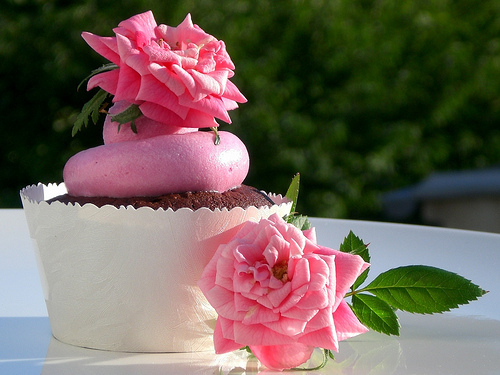
Chocolate cupcakes with rose water meringue buttercream by seelensturm on Flickr
Carolina of Semplicmente Pepe Rosa and Chiara of Ma che davvero? have organized Italian bloggers to post about the Nastro Rosa (Pink Ribbon) campaign today in a concerted effort to raise breast cancer awareness in the Italian blogsophere. I am honored to take part, and I thank Rosa of Bell’Avventura for letting me know of this opportunity. You can see the full list of participating bloggers at Mamma Felice.
My fellow Eye on Italy podcast hosts and I recently talked about some things Italy is doing to recognize breast cancer awareness month, including turning the Frecciarosa trains pink and offering deals for women passengers; you can also read more about the Promo Rosa and thinking pink at Moscerina.
E come sempre per ulteriori informazioni visitare il sito NastroRosa.it.
For those looking for more information on breast cancer awareness in English, here are some great links from BreastCancer.org:
- Symptoms & Diagnosis
- Treatment & Side Effects
- Day to Day Matters & Tips
- Lower Your Risk
- Discussion Boards, Chat Rooms, Fundraisers, and More
And remember our friend jewelry designer Angela Moore? Well she also does a breast cancer awareness collection, which you can find right alongside her ovarian cancer awareness collection:
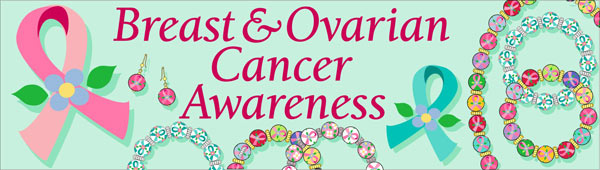
Angela Moore Breast and Ovarian Cancer Awareness Collections
And finally, two years ago I did a pink Flickr mosaic to mark Breast Cancer Awareness Month — here’s the 2010 version:
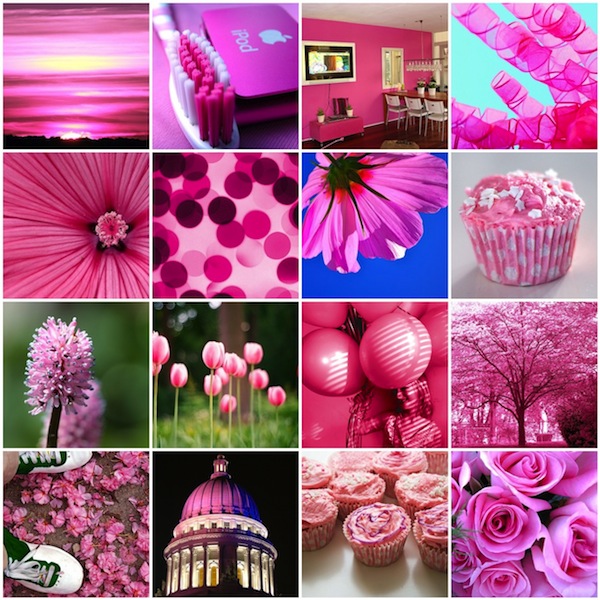
1. Pink, Pink, Sunshine…, 2. i love pink BASICS, 3. My pink wall, 4. Happy Pink Curled Party Ribbon On Aqua, 5. Starring PINK, 6. Free Pink Polkadot Bokeh Creative Commons, 7. Pink and Blue, 8. Pink Vanilla Cupcake, 9. Swamp Pink, 10. pink tulips, 11. Free Girl Holding Fun Pink Happy Birthday Balloons Creative Commons, 12. Pink, 13. Feet and Pink Blossoms, 14. Capitol Dome in Pink & Blue, 15. Pink Vanilla Cupcake with Heart, 16. pink roses
Remember, keep thinking pink and teal year round!
21 Easy Ways to Conserve Water: Blog Action Day 2010
A while back I shared 21 Ways to Reuse Coffee Grounds, so I thought I’d recycle (hah!) that theme for this year’s Blog Action Day 2010.
If you don’t know about Blog Action Day, you can learn more about it and related charities at the main site; see my past Blog Action Day posts from 2007 (the environment), 2008 (poverty), and 2009 (climate change); and also check out this video:
If you watched the video, you already know that this year’s theme is water and the reasons why. But for those who didn’t watch the video, from the Blog Action Day website:
Right now, almost a billion people on the planet don’t have access to clean, safe drinking water. That’s one in eight of us who are subject to preventable disease and even death because of something that many of us take for granted.
Access to clean water is not just a human rights issue. It’s an environmental issue. An animal welfare issue. A sustainability issue. Water is a global issue, and it affects all of us.
Are you using more water than you need to? You can find out by using the handy dandy H2O Conserve Water Footprint Calculator (US residents) or the equally handy dandy Water Footprint Network Water Footprint Calculator (international).
The good news is that there are lots of really small, simple things you can do in your everyday life that could end up making a big difference in the long run.
21 Easy Ways to Conserve Water
1. Never have a dripping faucet or leaking toilet. Not only will you save money, you’ll also save water.
2. Install low-flow faucets, showerheads, taps, and toilets.
3. Turn off the water while brushing your teeth, washing your face, shaving, etc.
4. Don’t use the toilet as a rubbish bin — tissues, cigarette butts, etc., can be thrown away instead of flushed.
5. Take quick showers, five minutes or less.
 6. Put a bucket in the shower to catch water while you’re waiting for it to wait up; use that water for watering plants or gardens.
7. Don’t discard water until you think about how else you might use it, e.g., to water plants.
8. Wash only full loads in the washing machine and dishwasher.
9. If you drink water from the tap, fill a bottle and keep it in the fridge instead of letting the water run until it gets cold.
10. If you water your lawn, don’t overwater. If you step on the grass and it springs back up, it doesn’t need water yet.
11. Water deeply and use mulch to help retain water in gardens; mulch also reduces weeds.
12. Water in the early morning to prevent too much evaporation.
13. Don’t let the hose run while washing your car.
14. Don’t hose down driveways and sidewalks; sweep away dirt and leaves instead.
15. Insulate your hot water pipes.
16. Don’t let the water run at full blast while rinsing dishes; use a separate basin if possible.
17. Scrape dishes clean of food as best as possible before putting them under water for rinsing.
18. Collect any water in gutters and use for plant or garden watering.
19. Use only the amount of water in cooking (making pasta or tea for example) that you need.
20. Avoid using the garbage disposal; compost your scraps instead or simply throw them away.
21. Practice these water saving tips even when you’re away from home, including when you’re traveling and staying in hotels.
There’s still time to take part in Blog Action Day 2010, but of course your daily, year-round actions are what will make the biggest difference.

Lemon blossom after the rain
Have you been trying to change your water use habits? How?
 Michelle Kaminsky is an American attorney-turned-freelance writer who lived in her family's ancestral village in Calabria, Italy for 15 years. This blog is now archived.
Calabria Guidebook
Recipes


