
Anti-American Bias in the Amanda Knox Case: Perspective of an American Lawyer in Italy
 After writing my review of Murder in Italy by Candace Dempsey, I found I hadn’t scratched the surface of what I had to say about this case. Once I started writing, I ended up with way too much material for one post, so I’m spreading it out this week, which apparently will be Amanda Knox murder trial week here at Bleeding Espresso. Believe me, I’m not thrilled about it either, but I do want to get this perspective out there, so I ask that you please bear with me, and we’ll get back to Calabrian sunshine and cuisine next week.
Over the past couple years, many people have asked about my opinions, and I understand why: I am American, I have lived in Italy for seven years, and I am a lawyer. I’ve refrained from offering my opinion publicly as I simply don’t know what really happened in that house in Perugia in November of 2007.
While I may come from a somewhat unique perspective, I don’t know any more than anyone else, and it’s not my job to decide whether Amanda Knox, Raffaele Sollecito, and/or Rudy Guede played parts in Meredith Kercher’s death. Courts have heard the cases and decided, and we’ll soon be going through a similar process again. If you want speculation on “whodunit,” you can find it all over the Internet. Have at it.
Putting aside the “Did they do it?” questions, from where I’m sitting, there have been certain aspects of the case that have bothered me from the beginning; that is why I’m writing now. It should be understood, but I’ll say it anyway: what follows is MY perspective based on MY experiences as an American (Italian dual citizen) lawyer living in Italy. Your mileage may vary.
To me, there have been three major misconceptions about the trial on the part of the American media: the so-called anti-American bias in the Italian criminal justice system, the so-called media circus surrounding the trial, and the so-called conviction based on nothing. I’ll deal with each in turn, starting with:
The So-Called Anti-American Bias in the Italian Criminal Justice System
Let me start by saying I am disgusted with the way the American media has treated the Italian criminal justice system; if someone wants to bash the system, I have no problem with that *if* the person knows what s/he is talking about. If you don’t know the basics of the system let alone its ins and outs, it’s not only uninformed but also beyond disrespectful to (literally) shout about it on television news programs and rile up the masses, who probably know even less than the “journalists.”
From my experience — and as many fellow Americans and other foreigners living in Italy might agree — Americans here are often offered some of the best treatment of any foreigners in many aspects of society. I can’t and won’t speak for all Americans in Italy, but I have seen absolutely no underlying bias working against us; in fact, I would say it’s often quite the opposite. I lived here through most of the George W. Bush years, and even at the height of his unpopularity in Italy, Americans as a group weren’t hated — and that’s saying something, I think.
I’m having a hard time understanding why if Americans tend to be treated extra-well in everyday transactions, it would turn to animosity, even a witch hunt according to some, in a situation as serious as a criminal investigation — although let’s remember that Knox’s accusatory finger pointed at Congan native but long-time Perugia resident Patrick Lumumba had him arrested before he was even asked about an alibi, so they seemed to believe wholeheartedly in that American back then.
 Put another way, I have no problem with the argument that the verdict was against the weight of the evidence (the judges and jury got it wrong) or with those who question the wisdom of putting Prosecutor Giuliano Mignini, who was going through his own prosecutorial misconduct trial (and was eventually convicted) in charge. Indeed, these are absolutely valid challanges. But implying or insisting that the entire Italian criminal justice system had it out for Knox *because* she is American is absurd.
Aside from personal observations, my mind keeps coming back to one question I can’t sufficiently answer, and I feel myself wanting to quote Denzel Washington’s line from Philadelphia, “Explain it to me like I’m a 4-year-old.” My question is this: “What would be in it for Italy to railroad Amanda Knox?” Millions of euros in tourism revenue lost per year because disgruntled Americans won’t visit and, taken to the extreme, the possibility that the most heavily armed country in the world wouldn’t come to its defense in a time of need?
OK, so maybe Mignini wouldn’t think on that grand a scale, but wouldn’t *anyone* throughout the entire government? I find it much more plausible that the Italian powers-that-be would find a way to make this go away if they saw a reason to do so. Remember Prime Minister Silvio Berlusconi came back into office in early 2008, just before a new American President would be taking over; couldn’t it have been an opportunity to forge a relationship with a new White House buddy?
Granted, like most murder cases, this one isn’t technically a national matter, but let’s be honest: Italy has liked staying on America’s good side since World War II, and anyone who knows anything about Italy knows Berlusconi can do pretty much whatever he wants. If he wanted this to go away, it would.
So I’m left to wonder: if a young American college student (a sympathetic “victim” if there ever was one) has been falsely accused of murder, wouldn’t it actually be in the Italian government’s best interests to fix the thing? Make it go away? Play nicey-nice with one of the world’s so-called superpowers? Or, short of that, make damn sure she gets a fair trial?
To be clear: I’m not saying the Italian criminal justice system is flawless. I’m also not saying there may not have been other improper and/or unethical reasons Knox was pursued as a suspect; from my experiences and observations, I just don’t believe her American citizenship was one of them.
I also don’t believe the Italian government would sit on its collective hands and let an American girl get “railroaded” as so many have claimed. It just doesn’t make sense to me why they would do that. Aside from not wanting a miscarriage of justice on their hands (never looks good on a government), international scandals just don’t look very good either — and Italy is famous for the bella figura.
 So maybe you’re thinking, “But part of the bella figura is actually solving a high-profile crime!” Indeed, but remember the police did have Guede’s DNA all over the crime scene, so his conviction wasn’t going to be difficult to obtain (and he’s even technically a foreigner although he spent most of his life in Italy). And let’s not forget there is also an Italian who has been convicted — on less evidence than there was on Knox IMHO. Anti-Italian bias?
Or one could say the bella figura aspect means that Italy wouldn’t want to make itself look bad by admitting it was wrong about Knox. Sure, that’s a possibility, but remember the police also made a huge scene of arresting Lumumba, but then had to release him two weeks later when his DNA didn’t show up at the scene and he had a solid alibi. Plus it seems it would be much more brutta to send someone to prison for murder and then get called on the international carpet, so to speak, by the U.S. Secretary of State or President on the issue — and they’d have to believe that would happen if it was a clear case of railroading, no?
Now, to be clear, none of this means I necessarily think Knox and Sollecito are guilty of the crimes they’ve been convicted of, but at the same time, I can’t easily explain away the fact that no one from a higher level of Italian government has stepped in at any point to question the arrests and convictions — this despite a highly publicized outrage campaign by Americans, including politicians, albeit not top-level. Secretary of State Clinton said just after the verdict that she’d be willing to talk to anyone with concerns about the case, but there’s been nothing else reported on that as far as I know. If anyone knows the status of Clinton’s review, please do share.
To me, all of the above suggests anti-American bias had nothing to do with this case and that there just may be something behind the conviction after all — such as the 400+ page document written by the court that explains its decision, which I’ll be discussing later in the week. Before we get there though, on Wednesday I’ll talk about another of my pet peeves about this case: the so-called media circus surrounding the trial. Hope you’ll be back for that.
Fellow Americans and foreigners in Italy as well as Italian natives, I’m especially interested in hearing your opinions and experiences, so please add your two beans! The same goes for everyone else too, of course. Please let’s try to remain civil and respectful. Personal attacks will not be tolerated.
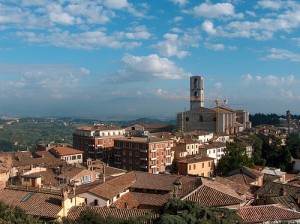
[PHOTO CREDITS: Perugia Panorama by Renzo Ferrante on Flickr; Perugia by Chris Yunker on Flickr]
112 Beans of Wisdom to “Anti-American Bias in the Amanda Knox Case: Perspective of an American Lawyer in Italy”
 Michelle Kaminsky is an American attorney-turned-freelance writer who lived in her family's ancestral village in Calabria, Italy for 15 years. This blog is now archived.
Calabria Guidebook

Recipes


Amanda was abandoned by her Government. Therefore there was no reason for the Italian one to intervene. That’s the general attitude of the Italians: if even Obama (she once supported) doesn’t care…
Harry, when you say “general attitude of the Italians,” you’re already discounting other things you said; stereotypes and generalizations will get you nowhere, at least on this site. Besides, I went to great lengths to explain above why exactly the Italian government would want to intervene. Anyway, thanks for reading and commenting.
I am with you on this. I can’t think of any motive Italy might have to stage a show trial against an American. I have serious doubts about Mignini and his competence, and hopefully those issues will be raised in the lengthy appeals process. I think perception is everything. The American media plays to the lowest level — the idea that other justice systems function differently immediately as not as just as ours. I myself am guilty of this way of thinking. It took a long time for me after moving to Germany do digest the differences in the justice system there to what I was familiar with in the United States. The fact is, every system of justice in every democracy has strong points and flaws. Italy, in its nature, is an emotively charged country. Some of that might spill over into the justice system; it would be characteristic of Italy to have it be so.
Amanda Knox has at times warranted my sympathies and at other times has given me reason to doubt her. I am waiting to see what the appeals bring.
I don’t believe that she is in prison for this crime because she is American. There might be factors such as timing, circumstance, and maybe cultural differences (in how she acted when arrested, for example) that come into play, but I don’t think it has to do with her passport.
For those who don’t know, Diana is an American who lives in northern Italy; thanks for sharing your thoughts. It does seem that we’re almost entirely (if not entirely) on the same page here…I’m not surprised 😉
I have been reading your blog for a while and I live in Seattle (Amanda’s hometown) and I have been really curious about your opinion on this trial.
Thanks for reading and commenting today, Trina; I hope you’ll stick around all week 🙂
I am Italian and I feel pretty confident in stating that there is no such thing as an Anti-American bias in this country, quite the opposite actually. If public opinion still has doubts about whether she did it or not is exactly because she is American. Had she been Romanian, or from some third world country the trial would have ended after the first two weeks… those bias maybe exist, but there is nothing of the sort towards Americans!!
When it was Lumumba’s turn, people were even too ready to believe that he could have done it, even though he had been a resident in Perugia for years, with no records of ever giving troubles. Guede has chosen a shorter form of trial because he knew way too well that people would not have been as inclined to grant him the benefit of the doubt as most people do with Amanda (and Raffaele).
I don’t know who killed that poor girl, but I think that Amanda and Raffaele are going through what anybody (from the Western World…) in the same situation would go through in our far from perfect judicial system.
Being American has nothing to do with it, if anything it’s to her advantage.
For the record, Gloria is in Tuscany; thanks so much for taking the time to share an Italian’s perspective; I have a link to a Beppe Severgnini piece that I’ll also share later in the week…don’t know whether I’ll have time to translate it into English, but it’s exactly what Americans should read regarding this case IMHO.
I’ll just start out by saying that I’m an American in Milan who has been here ten years. I have never faced any anti-American sentiment, and if anything, Italians assume that as an American, I get special treatment (ie, not needing a visa to be here – they are shocked to learn that I have to line up outside the police department like every other immigrant to deal with the bureaucracy needed to stay here). Anyone who knows me (even virtually) knows I’m not one of those “la bella vita” types. I take a very critical look at living in Italy. I complain about a lot of things that don’t work here. That said, I don’t think the U.S. news media has any clue what they are talking about when they discuss the Italian legal system with regards to this case. Firstly, they start from this pompous presumption that “Since our system is clearly better…” Our system is quite flawed as well. I mean, we’ve actually KILLED innocent people. I think that the Italian legal system works much like many other things in Italy – wait times are longer than in the U.S., organization is usually not as good, there is a lot more bureaucracy BUT at the end of the day, things get done and the people at work are usually professionals who are very good at their jobs. This is what I’ve found with, say, doctors here. They don’t hold my hand. They don’t try to be my buddy. Their offices aren’t nice and I often have to wait a long time. But when I was ill, they cured me.
Another angle that is much discussed in the U.S. media which isn’t such a big deal here is the whole “wild sex” aspect. The U.S. media makes it seem like the Italians (who are all ostensibly devout Catholics and reserved about their sexuality) have persecuted Amanda because she was a “free-spirited American woman involved in some kind of kinky sex game.” I don’t think Italians really care about the sex aspect. Anyone over in the U.S. who thinks that is the case need only come over here and turn on the TV. What they will see is that Italians flaunt sexuality in yogurt ads and that topless women in g-strings dance on evening programs meant for the whole family. Italy may be home to the Vatican, but Italians have fewer sexual hang-ups (IMO) than Americans do.
I have followed the case quite closely, and my personal opinion is that something is off. Certain things just don’t add up to me. I also was bothered by Amanda and Raffaele’s last statements to the court before the sentencing. Perhaps they are worn down by time spent in prison, but I found them to be very flat. It was like this was their big chance to proclaim their innocence and they should have been screaming from the rooftops that they absolutely had nothing to do with the crime…and there was something very unconvincing about both of them. They gave Amanda the chance to speak in English and have a simultaneous translator and she chose to speak in Italian. Grammatically her Italian was fine, but I found her statement to the court to be rambling and very anti-climactic. Of course that doesn’t make them killers and, in my opinion, they may not have had anything more to do with the crime than, say, letting Rudy Guede in the house (I’ve heard it reported that he sold them pot). I really, really don’t know. But I don’t think it is a clear case of the innocent American being framed for a crime she didn’t commit. Perhaps she didn’t commit it and had nothing to do with it. For her family’s sake (I’ve been really moved by all of the interviews with them and my heart does go out to them), I hope she wasn’t involved. But I’m not convinced beyond a reasonable doubt.
Thanks Michelle; you’re reading my mind about the sex thing — will be discussed briefly in the “media circus” post on Wednesday. I’m with you as well on those closing statements; neither of them did themselves any favors IMHO. Thanks for taking the time to comment so thoroughly 🙂
Living in Naples, where the Neapolitan mindset is decidedly AGAINST Amanda Knox, I have been asked my opinion about this case from many of the Italians/Neapolitans that I know. At times the media has painted her “Il Monstro” (the tagline that runs at the bottom of the screen during the news) even while the trial was ongoing! The circumstantial evidence that they have convicted her on is horrifying! To have a thin amount of DNA on a knife be the reason you are sitting in jail for life is outrageous! Guede confessed and gave a detailed account of what happened and they were able to convict him on the spot. But for some reason that wasn’t enough “drama” for the media and then Amanda Knox and Raffaele were convicted. Then, and only then did Guede recant and say he wasn’t guilty. Now, understandably there is confusion on Amanda’s part because she first blamed another person and then changed her story…. twice. Why she would do that is anyone’s guess, but maybe it was due to the fact that she was engaging in drug use? Fear of getting in trouble for other causes? Who knows?! It just seems a little fishy that story lines were created BY the police (the sex game, the fact that Amanda was holding the knife, etc. ) and these were printed in the newspapers with comic strip depictions of the murder! Italians are emotion based, that I agree with wholeheartedly. When I was shown these newspapers, the Italian holding it was clicking her tongue saying, “how could they do such a thing?” I thought she was talking about the depictions, but she was convinced by the newspaper that that was how the murder had happened. In America, theories are printed by the media, but full on picture based descriptions to sway the masses are not. I think there was a need for more “drama” in this story which led to the creation of wild and tantalizing tales. Unfortunately, the prosecution got ahold of these and ran with it, condemning Amanda Knox and Raffaele Sollicito. Guede only recanted his story after Amanda and Raffaele were put on trial, which says something about Guede. If you have already confessed your crime and received your sentence because you KNOW you are guilty, why change the story? In my eyes, that just makes him seem even MORE guilty of the entire crime. And how is it that he’s allowed to appeal when his DNA was all over the crime scene and he confessed?! Its enough to make you crazy, but to form your opinion on an entire judicial system based on one case is criminal in itself. If that were the case, America would have been condemned over the whole OJ trial, but that’s for another blog…. 🙂
Just one clarification, Guede never admitted to killing Kercher; he always said he was in the house, but always maintained that someone else killed her. His story has actually changed the LEAST of all three of the convicted, even through what he told a friend in intercepted conversations before he was apprehended. Thanks for adding your beans, Dominique! Much appreciated 🙂
Michelle I linked to you today. I could not understand where the Anti-American narrative was coming from given that Raffaele was also convicted and he’s Italian.
I agree with Michelle from Milano. Italy is much less uptight about sex than America. I was shocked to see SATC airing uncensored on Comedy Central and Fox Life here (even in the middle of the day). Meanwhile in America, where the show was created, they had to edit it before showing on it TBS. Italians offended by “kinky” sex? Please. We’re a country that almost impeached a President over a blow job.
As an black American living in Rome the harshest anti-America comments I’ve heard are from other black American expats. The Italians I know have traveled extensively and/or lived in America. They didn’t care for President Bush’s policies but that didn’t mean they hated Americans.
This case is a mess. I don’t know if Amanda had anything to do with Meredith’s death. I do know she didn’t do herself any favors with her bizarre behavior.
Amanda’s defenders keep saying she was naive. So naive she didn’t know to demand a lawyer the MINUTE she was arrested or brought to a police question for questioning? Did she never see an episode of Law & Order in her life? What kind of privileged and sheltered life did she have?
Totally with you, especially on that last part. I can’t imagine for the life of me why someone doesn’t know in this day and age that first you get a lawyer, then you talk if the lawyer tells you it’s OK. Boh. Thanks for adding your beans 🙂
Well written piece, Michelle. Agree totally that this has nothing to do with Ms Knox’s nationality. I’m a Brit in Italy, but have American friends here and we talked of this case also – none expressed having experienced anti-American behaviour on behalf of the Italians. As you say, quite the contrary.
You say: “I’m not saying the Italian criminal justice system is flawless” – well, which country can stand up and say that theirs is? We have had miscarriages of justice in the UK.
BUT, and it is a very, very BIG BUT!!! BUT, in Britain we do not allow the press to publish anything about the accused before the jury has come to a decision. They are not allowed, for example, to say things about the accused’s background, interview friends on their opinions of his/her character, etc. etc. This is because such information could influence the jury. I find it shocking that this is allowed. Why were the jury aware of the fact that Amanda Knox was performing cartwheels when being questioned before making a decision based solely on the facts before the event? Who knows how someone will behave when being accused of such a terrible crime? She may just be a little whacky and found herself overwhelmed by this surreal situation.
She may be guilty. She may be innocent. I honestly don’t know. This is because, personally, I haven’t heard, or read anything on this case which has persuaded me that she is guilty “beyond all reasonable doubt”.
As a matter of fact, I did originally have a line after the flawless part, something like “What country’s is?!” but I took it out. I’m not sure about the press laws in the UK — are the tabloids not part of that? Or maybe the nastiness was OK because the trial wasn’t in the UK, now that I think of it. British tabloids were *truly* horrible in this case IMHO, particularly about Knox and Guede (lots of drug-dealing drifter references). Of course, how much that would affect an Italian jury, I really don’t know.
Thanks for sharing your thoughts 🙂
Amanda Knox is the only one who has admitted that she was involved in Meredith’s murder.
It’s expected that the judges’ sentencing report will be published in English in mid-July.
By saying she admitted she was involved, are you referring to her one statement in which she said she covered her ears as Meredith Kercher screamed? Just want to be clear that she never admitted that she was in Kercher’s bedroom, had a knife, etc. Thanks for the update on the English version of the motivazioni; it’s really a dense document and I don’t admire those doing the translation! Thanks for commenting 🙂
As an American born and raised, I have to say this case has really disturbed me. 1st I want to say I dont have Italians. With that being said, as an American we are told from the very moment you can learn to speak that you are Innocent until proven guilty. If that trial would have happened in America there would have been a mistrial the first day. I think thats what has turned most Americans against the Italian Justice System. There are a ton of things that would have caused that trial to be thrown out, even after the first day.
1st The prosecution never let the defense test the DNA or if I understand correctly, they didn’t even let them bring in an expert.
2nd The prosecutor was a known abuser of Americans rights in Italy. He was even convicted of those charges.
3rd The prosecutor used the Satanic/Sexual Sacrifice Cult motive, amongst many other motives. Though there has never been a case proven in the US during the modern times. He changed his motives so many times a judge in America would have mistrialed it. The prosecutor used so many theories, in the hopes that each individual on that Jury would choose one they liked. I promise you not everyone on that Jury convicted her of the same motive.
4th No murder weapon.
5th No blood found on any of Amanda’s belongings.
6th None of the stuff thats missing or that might have been stolen was found on Amanda or her boyfriend.
7th Any statements she made while in police custody should have been thrown out. Since she was an actual suspect and was denied her rights under Italian Law.(Not sure about this one)
8th Knox and Sollecito where convicted of sexual assault? There was ZERO evidence of that. If there would have been brutal sex game then there would have been DNA evidence all over Kercher.
9th 2 different people Luca Maori and Luciano Aviello both tried to give testimony to the prosecution that there was a 2nd person there that wasn’t Knox or Sollecito. Neither wasn’t investigate or asked questions. Now I think both of those guys are probably nuts to begin with, but you just dont dismiss that kind of information when 2 different people are saying the exact same thing. Plus the prosecution used witness even more unreliable than either of those 2 in prison.
10th 2 cellphones found outside in the garden. Police charged Knox or Sollecito with stealing them. 1 belonged to Kercher the other to a different flat mate. Who put those outside in the garden?
Plus to top it off, they never proved she was present at the murder, with physical evidence or with eye witnesses. No one ever pointed the finger at anyone else. Usually when something this big goes to trial, someone points the finger and says they did it. If all 3 people would have been at that murder, 1 of them would have pointed the finger.
There are just way to many things that would have freed an American. Thats what has most Americans upset. By no means and i saying that Knox is innocent, if she did it, I hope the exact same thing happens to her. The only real evidence i’ve heard of is. She acted strange. Trust me when i say i only read and write 1 language so the only thing i read about is in english, these point of views are the only ones I hear about.
Hi Chris, I do hope you’ll come back Friday when I’ll talk about the evidence presented at trial (and believed by the judges and jury) — there was definitely more than just her behavior. Whether one believes the evidence is another story, but it was there and is discussed at length in the motivazioni. Thanks for coming by and sharing your perspective 🙂
Hi Michelle,
I’m referring specifically to this sentence:
“Everything I have said in regards to my involvement in Meredith’s death, even though it is contrasting, are the best truth that I have been able to think.” (Amanda Knox, 6 November 2007).
Well I think you’d need to provide more of that text to sustain your claim; as it is, it’s easy to be taken out of context. It also sounds like a horrible translation 🙁
Another thing I forgot to mention about the sexual assault, was the prosecution said in his closing statements that the break in and the sexual assault where staged. If the sexual assault was staged and that is the prosecutions theory. Why was the prosecution charging them with sexual assault?
At this point, I’m stepping out of your, Harry Rag’s, and PhanuelB’s discussion; as I stated in the post, I’m not about to discuss guilt/innocence, but you’re all welcome to do so to an extent 😉
I have to admit that I didn’t keep track of all of the ins and outs of the case – basically because I got tired of hearing about it. But, I am in absolute agreement with you. I have never, once, in all of my time here come up against any “Anti-American” sentiment. And, while I’m sure the Italian judicial system is not perfect, the American press has no idea what they’re talking about. (Of course, they also used the same tactics when discussing the British health care system too. But, that’s another story.)
As for the media coverage here in Italy, I think it was pretty much what could be expected of a case such as this. (Sometimes I wonder though, why shouldn’t the jury know about the accused’s actions while being questioned?)
The case is definitely a mess, but a lot of the mess was caused by Knox herself. Hopefully we’ll get a clearer picture of what went on during the appeal process.
Thanks for commenting Mary; I’m happy to read that other Americans here find the anti-Americanism claim to be bunk…perhaps it’ll finally go away in the discussion of this case. Hah.
I think that you make an excellent point about the idea that there is an underlying current in Italy of anti Americanism. I have lived here for two years and have not come across it at all. It’s just crap. It’s just like the American media to create that type of drama. It wasn’t so long ago that drinking French wine was anti American. Freedom fries anyone? This type of distraction method only confuses the truth and distracts from the real issue. But I guess that’s the point.
I have to say that I wasn’t really following the trial closely, but was curious to learn more about it. So thank you for writing about it. I look forward to reading your posts and the comments. Opening it up as a discussion is brilliant. It’s great to hear from some of my favorite bloggers who haven’t written much or if anything on their blogs about the case.
I’m enjoying reading what other bloggers have to say about it too; obviously many of us haven’t been following each and every detail like some of the other commenters, but I do think some of us are in a better position to comment on our experiences in Italian culture more so than a lot of what has been reported second- and thirdhand.
Hi Chris,
Your post is absolutely riddled with factual errors.
1. In case you didn’t know, defence experts in America, Britain or Italy are not actively involved in the forensic investigations of crimes.
It should be noted that in Italy, the defence lawyers and experts are notified of the time and date of non-repetitive tests and invited to attend.
No-one from the defence teams of Knox and Sollecito showed up. According to Italian law, if they are notified and they don’t appear for the testing, the results are perfectly valid.
It’s not true that the defence teams were not allowed to bring in their own experts.
Gino Professor, Carlo Torre and Walter Patumi were some of the forensic experts who testified at the trial on behalf of Amanda Knox. Professor Vinci, Adriano Tagliabracci and Francesco Introna were some of the forensic experts who defended Raffaele Sollecito.
There was an independent review of the forensic evidence in 2008. Dr. Renato Biondo, the head of the DNA Unit of the scientific police, reviewed Dr. Stefanoni’s investigation and the forensic findings. He confirmed that the forensic findings were accurate and reliable. He also praised the work of Dr. Stefanoni and her team.
2. Mignini is not a known abuser of American rights in Italy and he has never been convicted of these charges.
3. Mignini has never claimed that Meredith was killed as part of a satanic ritual.
4. The double DNA knife is the murder weapon. Amanda Knox’s DNA was found on the handle and Meredith’s DNA was found on the blade. The knife was compatible with the deep puncture wound on Meredith’s neck. Raffaele Sollecito confirmed the presence of Meredith’s DNA on the blade when he twice lied about accidentally pricking her hand whilst cooking.
5. There were five instances of Amanda Knox’s DNA mixed with Meredith’s blood in three different locations in the cottage in Via della Pergola.
Knox’s DNA and Meredith’s blood had united into one single streak on the basin and bidet which means they were deposited simultaneously.
7. Amanda Knox was questioned on 5 November 2007 as a witness and not as a suspect. The police weren’t required to record the interrogation or provide Knox with a lawyer. Her questioning was stopped at 1.45am when she became a suspect.
Knox voluntarily admitted that she was involved in Meredith’s murder in her handwritten note to the police on 6 November 2007. She even asked for a pen and paper to write this confession.
8. An abundant amount of Sollecito’s DNA on Meredith’s bra clasp which proves that Guede and Sollecito were both involved in the stripping of Meredith and her sexual assault.
Raffaele Sollecito’s forensic expert, Professor Vinci, claimed that he had found Amanda Knox’s DNA on Meredith’s bra.
9. Luciano Aviello is a convicted mobster and a well-known fantasist with a history of making false claims.
Luca Maori is one of Raffaele Sollecito’s lawyers. I think you mean Mario Alessi, the monster who brutally murdered Tommaso Onofri, an 18-month-old baby, with a shovel.
Amanda Knox and Rudy Guede both admitted they and Raffaele Sollecito were at the cottage when Meredith was murdered.
Make sure you read the judges’ sentencing report once it’s published in English.
As an American, also an Italian dual citizen, living in Northern Italy and an attorney who practiced for many years in the US, I have a couple of observations. First, I agree completely with the prior statements regarding alleged anti-American sentiment in Italy. My husband and I have been treated with nothing but courtesy and a great deal of curiosity about why we would chose to live in Italy rather than the US. The Italians I have met admire many of the great qualities of America and Americans even when they don’t always agree with some of our political policies and politicians. There is simply nothing in my experience or the experiences of other American friends residing in Italy to support the existence of anti-American sentiment here.
As to the Italian criminal justice system, I think it is outrageous for the media and others to criticize a system they know nothing about. Especially when they compare it to the US system, which oftentimes, they also know nothing about. The reference to “circumstantial” evidence is a classic case in point. There is nothing wrong with circumstantial evidence. In American jurisprudence a defendant can be found guilty based solely on circumstantial evidence, and this is oftentimes the case. This lack of understanding is not limited to the lay person, however, the worst offenders, in my experience, have been journalists. Having been involved in a number of high-profile cases, I have seen complete misstatements of testimony, misrepresentations of the law, and bias. Sadly, this has been more the norm than the exception. So, if we’re to compare systems, it needs to be done with an understanding and appreciation of both systems and not a knee-jerk reaction that, of course, the US system is more fair, more accurate, more just. That being said, there are aspects of this case that bother me, that I would have preferred to see done differently, but not enough to say that this case was entirely mismanaged. I don’t know if Amanda Knox is guilty or innocent, and I don’t have an opinion. The reason I have no opinion is that I didn’t observe the case, I haven’t read the transcripts of the trial, and I am not going to rely on a third party, whether the media or an author, to interpret the evidence for me.
Good article Michelle.
Thanks so much for commenting, Mary; I’m *so* with you on that “circumstantial” evidence thing too…that’s TV for you with it’s “Oh, it’s just circumstantial.” Uh, if there was eyewitness testimony that someone committed murder and/or a confession, the chances of that case seeing the inside of a courtroom are slim…so…if you’re talking murder trials, yes, you’re talking about a lot of circumstantial evidence.
It may have been that it was OK for the UK press to publish stuff about her past because it was permitted in Italy. I didn’t read any of the tabloids’ gossip because I was over here, but I did hear about things Amanda Knox had written on Facebook and all its ilk – and so, the jury must have also.
Why this is not OK – and it really, really isn’t – is that some dark skeleton (or even a slightly grey one) may pop out of the closet and influence the jury’s decision.
Imagine you are on a jury trying someone for theft and you learnt that sometime in this person’s past they had stolen a chocolate bar from a sweet store. Would this not influence your decision on the facts of the case you are currently considering? That is why it is out of order, unfair and unjust.
Well in the American system, this is meant to be weeded out during voir dire, the jury selection process; I would say it’s rare that in a high-profile crime, personal details of the defendant’s life *aren’t* out there for people to read if they want to….
Hi Casalba,
Amanda Knox wasn’t found guilty because of anything she had written on her facebook page. You need to read the judges’ sentencing report to understand exactly why she was unanimously found guilty of the murder of Meredith Kercher.
Incidentally, Rudy Guede is routinely referred to as a “drifter” and “drug dealer” in the media despite the fact he had lived in Perugia since the age of five and has no convictions for drug dealing.
In Casalba’s defense, she didn’t say she was convicted by what she wrote on her FB page; she’s saying that by having that out there, it may have influenced jurors. I think that’s an entirely fair statement.
Harry Rag,
Now if you read my original opening statement, I stated why americans where upset and why the case would have been thrown out if it was tried in America.
The prosecution claimed there was 3 knives used. They never proved that knife was one of the 3, just it was similar to 1 of the wounds. Plus they used low copy dna to test the knife. That means that there where only a few cells of kerchers dna on the kniife and a few cells of knox’s dna. You leave more dna in a single finger print than was on that knife. If i breathed on that knife there would have been more dna. There was no blood on the knife. Was their blood found in the sink where they claimed the knife was washed? Not that I heard of.
Someone has to be innocent.
They convicted 3 people of a crime. That wasn’t performed by 3 people. Guede claims that kercher was killed while he was in the other room. However, he never saw who did it. He knew the names of both Knox and Sollecito but never identified them as the other 2. The prosecution claims that the break in and sexual assault was staged. How could Kercher be murdered, a sexual assault and break in staged, and all this happen while Guede was in the other room. He would have had to seen what happened. Guede’s dna was all over the room and kercher. Neither Knox’s or Sollecito’s dna was found on the body. How could only 1 person of the 3 people’s dna be found on the body of such a gruesome murder if all 3 did it. How could they not find knox’s and sollecito’s dna on the body if the helped commit the murder and stip the body. Only 1 person’s dna on body. Only 1 person could have committed that murder the way the prosecution claimed. The prosecution never got Guede to finger either Knox or Sollecito at their trial. He had nothing to lose by testifying against them and everything to gain. He had a 30 year sentence. Sollecito’s only dna that was directly linked to the body was on the bra clasp and i haven’t found anywhere, in which it was stated that knox’s dna was on the clasp. There was also 3 unidentifed sources of dna on the bra clasp. Knox’s dna wasn’t on the body or in the room. They found knox’s dna in places where you would get easily get cross contamination.
The only place they found knox’s fingerprints was on a glass in the kitchen sink. Apparently some how she managed to remove her fingerprints from the entire apartment, including in the room kercher was killed in and leave only Guede’s in there. What an amazing girl. Seriously though, if she had that much common sense to remove all her finger prints or dna directly linking her to the murder, you would think she would not have acted so retarded while in custody. Guede’s finger print was in blood.
There was no DNA evidence that directly linked knox to the murder. The did say they found her foot prints in blood when they tested with luminol, but decided not to test and see if it was blood. ???
What i’m getting at is all 3 those of those people could not have committed that murder. One of them would have turned to get a lesser sentence. Since Guede’s own fingerprint was in the blood. He should have been the one to point the finger at who really did it. Except he never said knox or sollecito killed kercher. He is now saying he is innocent instead and dont know who killed kercher. Even though his fingerprints and palm prints where in blood and his DNA on the body.
A little over a month after getting a conviction of knox, Mignini was given a 16 month prison sentence stemming from Abuse of Office in another murder case. Some of the same things that mirrors his conviction are the same claims knox has made against the police. Just so you know Mignini did target american journalists in his abuse of power. In his 1985 murder investigation that ended up getting him that 16 month sentence, he used the theory that a satanic sect was involved. In the knox case he did bring up the satanic theory, he just worded it differently. He used the ritualistic” slaying that occurred around Halloween as his theory and a judge rejected it after the conviction.
First of all. As always Harry Rag is here posting his same discredited lies about the case. For anyone interested in the truth of the case please visit the excellent new web site injusticeinperugia dot org for a detailed discussion of why he is wrong.
Amanda’s case is a modern day witch hunt but it really isn’t about anti-Americanism. I think a sinister European tabloid press came into play and there may have been what I term a “Beauty Myth backlash”, a deep-seated resentment of the advantages that society affords the best looking women. Some people talk of “bruta figura” but the bottom line there is much here that educated people don’t understand.
I disagree with the criticism of the American Press. Their coverage of the case has been of the highest journalistic standards. The European’s should be ashamed of themselves for the tabloid trash they have failed to do anything about.
Here is what some American commentators are saying about the case:
Peter Van Sant (CBS News Correspondent)
“She’s an innocent woman. And I would stake my reputation as a journalist [on that] and I have been in this business for a quarter century.”
John Q. Kelly (Larry King Live 9-Oct-09)
“It’s probably the most egregious, international railroading of two innocent young people that I have ever seen. This is actually a public lynching based on rank speculation, and vindictiveness.”
Doug Preston
“This is a case based on lies, superstition, and crazy conspiracy theories and that’s it.”
Paul Ciolino (Private Investigator retained by CBS)
“This is a lynching. This is a lynching that’s happening in modern day Europe right now and it’s happening to an American girl who has no business being charged with anything.”
Judy Bachrach (Vanity Fair Editor on LKL 5-Dec-09)
“I have always felt that Amanda was going to go to a kangaroo court and unfortunately I’ve been proven correct.”
Steve Moore (Retired FBI Agent – 25 years)
“One reason that they were falsely convicted was that every rule of good investigation was violated.”
Tim Egan (New York Times Columnist)
“Preposterous made-up sexual motives were ascribed to her.”
“What century is this? Didn’t Joan of Arc, the Inquisition and our own American Salem witch trials teach civilized nations a thing or two about contrived sexual hysteria with a devil twist?”
Judge Michael Heavey (State of Washington, King County Superior Court)
“What I saw was a tremendous amount of not only leaks going to the press which demonized Amanda Knox but the leaks were false. So it was double…to me it was doubly offensive.”
Senator Maria Cantwell (Dem. Washington)
“The prosecution did not present enough evidence for an impartial jury to conclude beyond a reasonable doubt that Ms. Knox was guilty.”
Remember we don’t like personal attacks; play nice please 😀 Sorry, but if you think the American press has adhered to the highest journalistic standards on any issue in the past 5 years or so, I have to suspect your own standards….
Mary Leonardi-Cattolica:
No one says that circumstantial evidence can’t convict. Rudy Guede’s palm print in the victim’s blood is circumstantial evidence. The only piece of direct evidence I know of in the entire trial is Guede’s DNA inside the victim. And that is only direct evidence of sexual penetration, an element of the crime of rape.
I find it curious that you think we’re supposed to go read the trial transcripts. Italian law does not permit publication of the trial record to the internet. The reason for this law is to shield a corrupt and dysfunctional Italian judicial system from public scrutiny.
In Italy’s trial of the century their justice system was broken. The Italian people have an obligation to rise up and confront this judicial outrage.
You’re illustrating Mary’s point; Guede’s DNA inside Kercher isn’t direct evidence of anything either. It wasn’t sperm, which means it may or may help prove an element of rape depending on a jurisdiction’s definition of rape. In a case against Guede, the jurors would be asked to believe that because his DNA was inside Kercher, a sexual assault occurred — again heavily depends on the definition in that jurisdiction. If they have to make an inference, the evidence would be circumstantial. Mary was saying that many Americans don’t even understand their own justice system — and I agree with her.
She also didn’t say YOU had to go read the trial transcripts; she said that without reading them herself (among other primary sources) she wouldn’t be forming an opinion. If only everyone did the same….
The Italian people don’t seem to have a problem with these verdicts; in fact it seems only some Americans do. Check out the link to Beppe Severgnini’s article in one of my previous responses (Italian only though).
thanks Michelle for sharing this week about your thoughts. I’ve been interested in this case since we read about it in the paper the first morning after it happened…while we were still living in Italy. It was interesting being around the news there, then back here in the States. I’m excited to read more this week!
Thanks Erin! Glad you’re enjoying this little detour from food and fun 😉
Chris,
Please try to get your facts straight.
The prosecution didn’t claim that three knives were used in the attack on Meredith.
Low Copy Number DNA testing is a technique that is used to amplify weak traces. If performed well, it is as reliable as any other PCR technique.
If you had read the judges’ report, you would have known that Meredith’s DNA on the blade could have come from her blood.
Sollecito claimed that Knox and Sollecito were at the cottage and that they murdered Meredith.
Rudy Guede’s DNA wasn’t all over Meredith. Surprisingly, there was only one instance of Guede’s DNA on Meredith’s body.
The defence experts were unable to prove there had been any contamination at the trial.
Mignini was found guilty of illegal wiretapping despite the fact that the phone taps were authorised and checked by the investigating judge. He was given a suspended sentence.
Incidentally, the Washington Commission on Judicial Conduct has filed a complaint against King County Superior Court Judge Michael Heavey, alleging he violated the state’s Code of Judicial Conduct for his support of Amanda Knox.
Why do you think Amanda Knox and Raffaele Sollecito gave multiple conflicting alibis and repeatedly told the police a pack of lies?
Thanks in advance.
Sorry I know I was butting out, but I’m with you on all of this (according to what I’ve read in the motivazioni, this is all an accurate representation) except for this:
Sollecito claimed that Knox and Sollecito were at the cottage and that they murdered Meredith.
Can you tell me when that happened? Thanks!
Hi Michelle I just wanted to to say thanks for taking on such an undertaking! I have always read your blog and will continue. Great work from you as usual dear! I have followed the case since it occurred and am still flabbergasted by much of it!
Thanks Deb; undertaking indeed, but hopefully it helps inform the discussion a bit, even if it’s on a relatively minor point on the large scale of the tragedy.
Michelle, I am so glad you addressed this topic as I was curious to hear your opinion. As you know I live in the U.S. and practice law here, but am half Swiss, half Hungarian, and because of my mom being from the Italian part of Switzerland, grew up exposed to Italian culture, because the Italian part of Switzerland is more tied culturally to Italy than to the rest of Switzerland (but that’s a topic for another day). Anyways, I followed the Knox trial on and off, reading U.S., U.K., Swiss (both in French and Italian) and Italian media, and was struck by the disconnect you address above. None of the Swiss and Italian coverage that I saw showed anti-American sentiment that I kept seeing mentioned on the U.S. media. I really appreciate your thoughtful piece on this topic and look forward to reading more later this week.
Thank you Valerie; it’s certainly interestingly to hear international perspectives as well so I look forward to your continued commentary too 🙂
Rudy Guede formally accused Amanda Knox and Raffaele Sollecito in his three-hour interrogation with the prosecutor on 26 March 2008.
Guede has made other statements, claiming that he heard Amanda Knox arguing with Meredith over the missing money and that he had struggled with Sollecito.
OK so you meant “*Guede* [not Sollecito as you had typed] claimed that Knox and Sollecito were at the cottage and that they murdered Meredith.” Gotcha. Yes, this is my understanding as well.
Harry Rag,
If the knife that Knox’s dna was on, only matched 1 of the 3 stab wounds. Then multiple knives had to be used. Why would someone stab someone with multiple knives?
Low copy DNA is only used when the traces are so small that regular dna testing can’t pick them up. The traces could have come from Meredith when she cleaned the knife, sneezed to close to it or brushed it with her hand grabbing something else. It could have been contaminated from other utensils. THe knife was in the drawer with them. Did they test every knife, fork, and spoon with Low Copy DNA to see if those other items where cross-contamintated. NOPE Heck the forensic personel didn’t even change gloves when handling different items in the apartment. The mixed dna and blood they got from kercher and knox was from samples they took in the bathroom when they used swabs on multiple areas. In other words, they got a swab, the took sample from this spot, then they took sample from another spot.
Guede never claimed that knox and sollecito killed Kercher at the trial of knox and sollecito. In phone records he claimed that knox and solleciito where not at the apartment. Though i was wrong about the part where he did claim at HIS trial they did the murder. The prosecution never let the defense call Sollecito to the stand. They didn’t want Knox and Sollecito’s attorneys to cross examine their key witness. I hear that Guede will be out of jail in 3 or 4 years. Is that true?
Their conflicting alibi’s where part of a 43 hour interogation over 5 days. They used 12 different interogators on Knox that last night when they finally broke her. I can get my kid to confess to something after just a few hours. Even if he didn’t do it.
You can keep claiming that knox did it all you want. However the fact that this many people in the world are shocked by this conviction, not just Americans, should tell you of the injustice that was done to Knox and Sollecito. Even people in the UK know that Knox and Sollecito would not have been convicted there. Its not just American news, I’ve also read newspaper articles from the UK that are shocked.
Chris,
Judge Massei and Judge Cristiani concluded after reading the medical reports that two knives caused the wounds on Meredith’s neck. They attributed the 4cm wound to Sollecito because he was known to carry a small knife with a 4cm blade and the deep puncture wound was attributed to Amanda Knox.
Judge Borsini and Judge Belardi, who presided over Rudy Guede’s appeal, also believe that Knox and Sollecito stabbed Meredith.
The double DNA knife was sequestered from Sollecito’s apartment. Meredith never went to Sollecito’s apartment, so the traces couldn’t have come from her when “she cleaned the knife, sneezed to (sic) close to it or brushed it with her hand grabbing something else.”
It’s not true that the scientific police didn’t change gloves when handling different items in the cottage. International protocol recommends changing gloves very often, not every single time a technician touches something.
It’s also not true that the scientific police took took different samples with the same swab.
Guede claimed that Knox and Sollecito must have murdered Meredith on 19 November 2007 in a Skype conversation with his friend Giacomo.
Sollecito refused to take the stand at his trial. It had nothing to do with the prosecutors.
Knox and Sollecito both lied repeatedly before 5 November 2007, so their lies can’t be attributed to police coercion or brutality. Sollecito even admitted that he had told the police a “un sacco di cazzate” (a load of rubbish) and claimed Knox had asked him to lie for her.
It should be noted that Knox lied to Filomena on 2 November 2007 and to her friends in an e-mail on 4 November 2007.
In the last opinion poll I saw on The Daily Beast website, the vast majority of people thought that Knox and Sollecito were involved in Meredith’s murder.
Hi Michelle! I agree with you and the other commenters who have commented on the absolute lack of anti-American sentiment in Italy. I have lived here for over 18 years and have never experienced anything of the kind. Quite the contrary, Italians react positively to finding out that I am from the US. “Oooh, l’America!” You are given a sort of star status just because of your country of origin.
It’s quite interesting for me to read your other commenters and see how some of them seem to have so much invested in either one scenario or the other. I wonder why?
This is why I noted on Friday in my book review that it’s really not easy to find objectivity; not only are people on one side or the other, they are *vehement* about it — well I’d say one side can be more vehement than the other, but then that’s me being partial 😉 Thanks for commenting!
Sorry, I meant to say that the prosecution never let the defense call Guede to the stand.
Also the knife will not pass appeals court because of shoddy forensic work. The knife in question was contaminated. The prosecution also withheld information. They withheld the dna testing dates and alot of the results from the defense. The also withheld the information from the jury in which they stated that Amanda’s footprints tested positive for luminol but they didn’t do blood tests on it. In fact they did do blood tests on the footprints and it turned up negative for blood. Seriously though, how can you say Knox and Sollecito did it and believe Guede. After all not only was Guede’s dna on the victim, his dna was inside her as well. His finger prints and palm prints was in the girls blood. Now you telling me that Knox and Sollecito stabbed the girl with 2 knives and Guede had nothing to do with the murder. Of the 3 people, Guede fled the country and the other 2 stayed. The prosecutor is convicted of abuse of office. Of all those people, knox and sollecito have more crediblity. Especialy considering all the lies Minigin’s office leaked to the press.
Michelle:
Ok let’s take a detailed look at the discussion about direct evidence. The allegation that my statements about direct evidence show a lack of understanding of the law is denied.
My statement of a basic principle of law was precisely correct in every respect. Your statement was flat wrong. What do you disagree with?
1) Direct evidence does not have to prove all of the elements of a crime. It may prove a single element.
2) Sexual penetration is an element of the crime of rape. Definitions of rape and penetration may differ from jurisdiction to jurisdiction but are not relevant here.
3) Sexual penetration never proves all of the elements of the crime of rape. Lack of consent, underage status of the victim or certain other criteria must also be proven.
4) Presence of DNA of the actor in the victim’s vagina is direct evidence of sexual penetration.
Let me repeat that Guede’s DNA inside the victim is direct evidence of his sexual penetration of the victim which is an element of the crime of rape. It is not circumstantial because no other inference is required to prove that he was there.
The assertion that evidence that proves only an element of a crime is always circumstantial is flat wrong.
Didn’t say that “evidence that proves only an element of a crime is always circumstantial.” I stand by what I wrote, and I do recommend you read people’s comments more closely before you respond. This is now several times that you’ve mischaracterized what someone has written and went off on an argument against it. When you do that, you waste everyone’s time (including your own) because you’re arguing against an argument that exists only in your mind.
I got a few questions I would like answers too. If anyone has the info. Where is the washing machine located? Why where the cell phones in the garden and the keys and credit cards not found. Did anyone see Guede and Kercher together at a club? Where their any fingerprints on the cell phones?
Chris,
Rudy Guede refused to testify at Knox’s and Sollecito’s trial. It had nothing to do with the prosecution.
There is absolutely no evidence that the double DNA knife was contaminated and the defence experts were unable to prove it had been contaminated at the trial.
Alberto Intini, head of the Italian police forensic science unit, pointed out that unless contamination has been proved, it does not exist.
Dr. Renato Biondo and Professor Francesca Torricelli confirmed that Meredith’s DNA was on the blade.
The prosecution didn’t withhold any results from the prosecution.
Criminal biologists who work regularly on crime scenes can distinguish easily between the bright blue glow of a blood trace and other reactive substances.
Furthermore, the luminol traces were exactly where the criminal biologists expected them to be. For example, in Filomena’s room where the break-in was staged and the hallway.
The fact that Knox’s and Meredith’s DNA was found mixed together in the trace in the hallway is further proof that the luminol was reacting to Meredith’s blood and that it had been deposited by Knox.
The judges noted that there was no evidence that any other reactive substances were present in the various areas in the cottage and that it was certain that the luminol was reacting to Meredith’s blood because of the abundance of her blood at the crime scene.
I’ve already pointed out to you that there was only one instance of Guede’s DNA on Meredith’s body.
I’ve never stated that Guede had nothing to do with Meredith’s murder.
Knox and Sollecito have no credibility whatsoever. They both gave multiple conflicting alibis and lied repeatedly to the police. Knox even gave three different times for when she and Sollecito had dinner on the night of the murder.
“But that night, Amanda was interrogated all night. And by not just one or two detectives, but by a dozen (12) detectives. Again, the police not only do not dispute this, but they have entered this evidence into court. Perugia has a population of approximately 165,000 people. I live in a town of 100,000 and there are less than ½ a dozen detectives to cover the city, much less work an all-night shift. Perugia had to call in resources from Rome to help that night. It was not a spontaneous interrogation. It was pre-planned, and pre-planned to be an all-nighter.
…
If you are going to have 12 detectives available all night for an interrogation, you need to let them know well in advance. You need to schedule them, to change their days off, etc. You have to pay them overtime. In the real world, 12 detectives all night is something that has to be signed off by higher-ups. What does this tell us? It tells us the interrogation was NOT a rapidly unfolding case where lives were at risk—they planned this interview well in advance, and INTENTIONALLY overnight. They knew Amanda was available all day (as they had interviewed her for 35 hours in the past four days). There was no deadline. The lead detective in the case, Giobbi, had already said they “knew” Amanda was the murderer by this point. So they did not believe there was a murderer on the loose “out there.” (And yet there was).
…
What do you think the police were attempting to do that night? Determine the truth? Or force a scared American college girl to create a case for them?
…
What the inquisitors did not achieve however, speaks volumes of Amanda’s character and innocence. No matter how hard they tried, and how manipulative and coercive they were, Amanda repeatedly denied ANY involvement in the murder, and the police could develop no feelings of guilt in her. This is not sociopathy, this is innocence. Note that in her note, she expresses empathy for the officers who had just subjected her to this abomination.
Never once did she question her own innocence (value system). And never did she experience any sense of identification with the accusations of the police.”
http://www.injusticeinperugia.org/FBI7.html
Hi Michelle –
Thanks for this – it’s fascinating stuff. I didn’t follow the case very closely as it was happening. Only after I recently read “The Monster of Florence” by Douglas Preston did I learn that the prosecutor for the Knox case was the same guy in the Monster case. So, I don’t believe Amanda Knox is being “railroaded” because she’s American – her nationality has never entered my mind as I question all this. I just have serious doubts about Mignini’s ability to put together a coherent case. To me, from my admittedly limited knowledge of both the Monster and Knox cases, he seems to have a pretty wild imagination…
Proof100,
You wrote:
“Never once did she question her own innocence (value system).”
I suggest you read the following sentence from Knox’s handwritten note to the police very carefully:
“Everything I have said in regards to my involvement in Meredith’s death, even though it is contrasting, are the best truth that I have been able to think.” (Amanda Knox, 6 November 2007).
Maybe you not understanding me. There was NO BLOOD ON THE KNIFE. The knife that was taken out of the drawer was selected because it was clean. Problem is no other knives from that drawer where taken. So there is no quality control test for contamination.Apparently Knox decided she was gonna take a knife from her boyfriends house and go kill someone, then bring it back and clean it. So there is no quality control test for contamination.The knife wound that matched the wound on the victims body could have come from any common household knife. You ever seen someone killed from a neck wound or heard other peoples accounts of neck wounds? Trust me when i say you are going to get blood on you. There is no way knox could have stabbed Kercher and not left her DNA in that room or left bloody footprints in the house. Also the house was never cleaned. That was proven by the forensic team. Eventhough the prosecutor tried to say they cleaned the house with bleach.
Harry Rag,
It is required ethically to not take it out of context.
Great Article Michelle.
By now the actual facts of the case hold little interest to me. They will be sorted out in appeal (if not in the comments section of blogs and newspapers).
However, this case has become interesting in view of the response to the case, rather than the case itself. You have clearly and eloquently described how the Anti American bias is very doubtful in evidence, but totally illogical politically and economically for Italy. In addition, Italians, far more than they should, give the benefit of the doubt to Americans, and us other foreigners.
But the anti Italian feeling in the US appears localized (have to spell that American to pass your spell checker!). Research through the 50 odd states News and blogs reveals very little coverage and generally very little comment.
Overall, I think the people who will stop buying Italian wines and not travel to Italy are probably the ones who never bought Italian wines and never left the US. (But they will keep buying their Gucci’s etc).
Good to read an alternative perspective.
Thanks for reading Keith; I guess I just never understood how the anti-Americanism claim went so far without anyone really rebutting it…and I think you’re right that there’s a very vocal minority in the US shouting such things. Apparently not even Knox supporters in the comments believe anti-Americanism had anything to do to with it, so who knows who *does* believe that. Hmm….
Chris,
There was no blood on the knife because it had been cleaned.
A couple of knives were taken from Sollecito’s apartment. Armando Finzi testified that he took the kitchen knife because it was compatible with the wound as it had been described to him.
You seem to forget that Meredith had never been to Sollecito’s apartment.
If you had read the judges’ sentencing report, you would have known that Meredith had different-sized knife wounds on her neck.
Knox tracked Meredith’s blood into the bathroom, the hallway, Filomena’s room and her own room.
Her boyfriend left an abundant amount of his DNA on a small piece of Meredith’s underwear and he left a visible bloody footprint on the blue bathmat.
Rudy Guede’s visible bloody footprints led straight out of Meredith’s room and out of the cottage which means he couldn’t have staged the break-in in Filomena’s room or gone into the blood-spattered bathroom.
Hi Keith,
It doesn’t take much common sense or emotional intelligence to realise that innocent people don’t give multiple conflicting alibis and lie repeatedly to the police.
Knox’s and Sollecito’s sentences will be confirmed at their appeals.
Maybe if her stories didn’t seem so far-fetched, people would have bought her take on what happened. Sadly though, pot highs don’t last 24 hours, and claiming ignorance of whether she was even in the house when it happened reeks of desperation. Fingering an innocent man earlier as well didn’t help her case. No one can know for sure whether she did it or not, but, based on her recount, I’m not surprised the Italian courts found the way they did. She came off guilty after hearing her explanations and story changes.
I have to agree that the different versions of what happened coupled with implicating Lumumba definitely did not work in Knox’s favor. Thanks for reading and commenting AJ 🙂
[LEAVING PERSONAL ATTACK OUT.]
The bloody footprint on the bathroom mat obviously belonged to Guede. Look at the big toe.
Knox did not track anyone’s blood around. Please read the articles by former FBI agent Steve Moore on the injusticeinperugia site. His third article “The Luminol Lies” deals specifically with Harry’s fabrications above. The luminol prints were not tested for blood, period. Because the forensic investigator in the case, Patrizia Stefanoni, was not properly trained in the use of luminol she did not know luminol is only a presumptive test for blood. She did not test the luminol prints for blood and there is no reason to believe any of them contained blood.
The so-called double DNA knife has been thoroughly discredited as evidence. CBS news had 9 different outside experts examine the evidence available to them (Italian authorities have refused to release the “fsa files” associated with the testing” and they determined the sample was of such trace amounts that it could not be tested properly.
There is no point arguing with you Harry Rag. No where have I been able to find where there was more than one knife tested from Sollecito’s home. The lab that the low copy dna was done in, wasn’t even certified to perform those tests. Plus the low copy dna testing was done right after all the normal dna testing was done. Without cleaning the lab first. Which is what your are suppose to do to avoid cross contamination in low copy dna testing.
The staged break in wasn’t proven. Matter of fact Guede was found guilty of stealing stuff from a place where he climbed 15 feet into a similar window at another location. That window was much harder to get in. The window to Filomena’s room was much easier to get in. They proved that the rock was thrown from the ground and hit the window. Someone would then have had to open the window after the rock was thrown. There is no evidence to support that the room was staged for break in.
Knox didn’t track Meridiths blood across the house. Seriously dude you really need to investigate that bloody foot thing. I think there was one bloody female footprint. So apparently knox hopped on 1 foot across the house to not track blood. They couldn’t even prove it was amanda’s foot. There was no blood found in Filomena’s room. So its more likely the window was broken before Meridith was killed.
Harry writes:
“Innocent people don’t give multiple conflicting alibis and lie repeatedly to the police.”
It is not clear what was said and what was asked during this interrogation. What is clear is that corrupt Italian authorities made fully certain that any conversation in which they participated would not be recorded.
When first brought to the police station authorities secretly recorded a conversation between Amanda and Raffaele while they were alone. Prior to that they had listened to the cell phone conversations of all involved. They had the ability to record any interrogations. They made a conscious decision not to so that they could avoid public scrutiny of their actions at a later date.
Shortly after Amanda was taken into custody, authorities used a corrupt prison official to tell Amanda that she was HIV positive. According to Barbie Nadeau in Angel Face this was simply a trick to help acquire evidence about Amanda’s previous sexual encounters. There was no scientific reason to believe that she was HIV positive.
Amanda and her parents are now being charged with slander by the police because Amanda stated that she had been struck during the interrogation.
These same corrupt prison officials went on to provide (presumably sell) the diary entries Amanda wrote shortly after the AIDS lie to European tabloids. These tabloids reported that Amanda had had sexual encounters with 7 Italian men in 60 days. Those claims were a lie. Amanda had not had sexual encounters with 7 Italian men in 60 days and her diary didn’t say she had.
The AIDS incident removes all doubt that Italian authorities were willing to mistreat her and to lie about it. When Amanda says she was struck, she should be believed.
Michelle, I hope you read and review Barbie Nadeau’s excellent book, Angel Face, on this subject. She is very objective and balanced (despite the negative, false, and bitter flames from the “Free Amanda” crowd posted here.) One of the most fascinating parts is where she poses her theory of how the murder may have occurred.
I would like to read it just to see what the fuss is about — but it’s $10 on Kindle and I hear it’s pretty short…so I’m going to have to wait until I can find a used copy or something 😉 Thanks for commenting Rebekah 🙂
“Anti-Americanism” is not a real issue in this case. It was a hypothesis of some. Raffaele is Italian. I see it (that Amanda is from the US) as incidental, even if it might have been a part of things. It just happened that Amanda was American. Maybe that is part of why and how it worked, but not the reason. If Amanad and Raffaele were not at the cottage that night, as I believe they were not, then the reason they were arrested is outside of the known facts.
Well thank you for addressing what my post was about; always appreciated 🙂
Rebekah,
The theory that they don’t even know that they did it? She said that they just woke up with all that at the cottage and then didn’t call the police or get scared the murderer would return to hurt them, but thought they must have been involved so they started to clean it up? That doesn’t add up. I think they would have been first and foremost frightened for their safety.
Rebekah:
Barbie Nadeau has a long history of yellow journalism and shameful lies with regard to Amanda’s case.
Barbie Latza Nadeau thinks AK and RS could get so high on drugs that they could commit a murder the evening before and not remember it. Did not happen, period.
Let’s take a look at how she thinks the crime occurred. And let’s keep in mind that there was no relationship between Rudy and the others. Barbie’s version of events like the Mignini/Massei fantasies is in the words of New York Times correspondent Tim Egan, “preposterous and made-up.” From Angel Face:
“Between 9:15 and 11:15, Amanda, Raf, and Rudy got themselves seriously messed up; Amanda asked Meredith if she could lend her money to pay Rudy, and Meredith reluctantly did so. “ P162
“She prodded Rudy to go see Meredith; he went into her bedroom and started trying to kiss her and fondle her until she called out. Amanda and Raffaele went back to see what was going on, and instead of helping Meredith fend off Rudy, joined in the taunting.”P162
“By this point, Amanda, Raf, and Rudy were beyond the control of conscience. Raf took a switchblade out of his pocket and started teasing Meredith with it. Rudy had a knife in his backpack, and that came out as well. They had no intention of killing Meredith, but they were taunting her with knives on each side of her neck and she, in essence, impaled herself on the larger knife as she twisted in the grip of someone holding back her arms.”P163
“The next morning, Amanda and Raffaele wake up around 6:00 A.M. with crippling hangovers and no memories of the night before. They peek into Meredith’s room to find her battered and lifeless body, but they still can’t remember anything.” P164
“Rudy is nowhere to be found, and in fact, they don’t remember that he was there. Amanda has a hazy recollection of a black man, but the only person she can think of is Patrick.”P166
Perhaps it’s best to leave this tabloid speculation on display without the distraction of commentary.
Chris,
You wrote:
“No where have I been able to find where there was more than one knife tested from Sollecito’s home.”
Andrea Vogt reported that two knives had been taken from Sollecito’s apartment.
“A small knife was taken into evidence from Sollecito’s bedroom, along with other items.” (Andrea Vogt, The Seattle Post-Intelligencer, 28 February 2009).
Dr. Stefanoni’s works for the scientific police. Her laboratory already met the required standards and she wouldn’t have to change any procedures to get certification from an outside organisation.
The staged break-in was proved. You clearly haven’t read an accurate translation of the judges’ sentencing report.
There is absolutely no evidence that anyone stood outside Filomena’s window and climbed up the vertical wall. There were no marks from soil, grass or rubber soles on the wall. The earth of the evening of 1 November 2007 was very wet, so if anybody had climbed the wall, they would have left some marks on it.
The glass on the window sill and on the floor show no signs of being touched after the window was broken, which would have been the case if the intruder had gained entry through the window.
There was not a single biological trace on any of the shards of glass. It would have been very likely that an intruder balancing on the window sill would have suffered some kind of injury or cut because of the shards of glass.
If the window had been broken from the outside, there would have been shards of glass outside, but there wasn’t even one.
Rudy Guede was never found guilty of “stealing stuff from a place where he climbed 15 feet into a similar window at another location. ”
Aren’t you embarrassed to have written so many factually incorrect statements?
I highly recommend reading the judges’ sentencing report once it’s published in English. At the moment you’re speaking from a position of ignorance.
I was under the impression that it was Italian law that all prisoners are HIV tested before placement in general population.
Michelle, can you shed any light on this? I think this is something the US would greatly benefit by as well.
I don’t know the answer to this, but if I find out, I will let you know! Thanks for reading and commenting 🙂
Harry writes:
“Rudy Guede was never found guilty of stealing stuff from a place where he climbed 15 feet into a similar window at another location.
Aren’t you embarrassed to have written so many factually incorrect statements?”
When police catch somebody red-handed and don’t do anything about it, then don’t be surprised when they don’t have a criminal record.
Maybe the Italian police should be embarrassed for not arresting him. It is undisputed that they caught him with the items stolen from the law office. He had just broken into a nursery school in Milan, armed with a knife no less.
Remember this because it is important. If the incompetent Italian police had done their job and taken Rudy Guede out of circulation in Milan 4 days prior to the murder, then Meredith would still be with us. When apprehended in Milan police had definitive evidence of his participation in two separate breaking and entering incidents. All they did was put him on a train back to Perugia where he could be somebody else’s problem. The owner of the nursery school stated that, “We all had the feeling that this was a dangerous person.”
Guede was convicted of receiving stolen property from a break in which someone climbed 15 feet up a building and went through a window similar to the one that was found at the kercher crime scene. There are no photographs that i have been able to find of the broken glass in the room. Amazing how the two crime scenes are so similar. One was just a simple burglary and the other had the same exact profile of the burglary except Kercher was in the apartment. How do you think they where able to match Guede’s fingerprint.
Chris,
You wrote:
“Guede was convicted of receiving stolen property from a break in which someone climbed 15 feet up a building and went through a window similar to the one that was found at the kercher crime scene.”
No, he wasn’t. Rudy Guede didn’t have any criminal convictions at the time of Meredith’s murder. You really need to get your facts straight.
Rudy Guede had to give his fingerprints in 2005 for permission to reside in Italy.
The Italian Police are incompetent in Amanda’s case because:
1) They failed to recover the bra clasp until 47 days after the murder.
2) Patrizia Stefanoni was not properly trained in Low Copy Number (LCN) DNA testing and did not know that a luminol hit required a second test to confirm the presence of blood.
3) They destroyed at least two hard drives that contained important evidence
4) They failed to notify the family of the victim in a timely fashion. In fact the victim’s family had heard rumors that a British student named Meredith had been murdered and had been calling British tabloids in a desperate attempt to get more information.
5) They failed to examine the drain pipes in Raffaele’s house. If their theories are true they would have found blood and bleach there.
6) The failed to take DNA samples of the individual identified by Francesca Bene for comparison to DNA found at the crime scene.
7) They failed to measure the victim’s body temperature until 11 hrs after she was found.
8) They failed to go to local medical clinics to look for people with possible defensive wounds.
9) They failed to analyze a large sperm sample found underneath the victim.
10) The failed to record the interrogation of AK.
11) They think that covering a victim with a duvet is a sign of a female killer. Standard texts on crime scene investigation make no mention of this.
12) They think that a large number of wounds is a sign of multiple killers. Experienced investigators call this “overkill” and it is not uncommon in homicide investigations.
13) They failed to arrest Rudy Guede in Milan even though they had proof of his participation in two separate breaking and entering incidents.
14) The failed to investigate reports by Cristian Tramontano that Rudy Guede had broken into his house and brandished a knife during his escape.
I am glad to hear your perspective as an American lawyer in italy on this case.
I don’t know all the details because like you, I wasn’t in that house that night, but it seems like Amanda Knox is guilty.
She accused an innocent man of the crime. He was jailed. On her words alone. If anything that proves that there is not anti-Americanism at play anywhere in Italy but there is antiAfricanism (if that’s the right word)
Yes, I agree with you, there was a heavy slant in the American press that The ‘Italians don’t really know what they are doing because their justice system is all wrong’ and that ‘there is an anti-American sentiment in Italy’…. Of course, what else are they gonna say? She’s an American. They don’t WANT her to be guilty. The press is not impartial.
Thanks for commenting about the alleged anti-American bias at least; much appreciated 😀
Chris C.,
A side point… with the added coincidence that the broken window in the cottage was in the room of a trainee lawyer.
Also interesting about the burglary of the law firm, apparently, the perpetrator was able to disarm the alarm.
Michelle, you’re absolutely right, this case has nothing to do with anti-Americanism, or with issues specific to the Italian justice system. It has to do with cognitive problems in the conduct of criminal investigations, which can happen anywhere. In 1988, a young, white, well-educated American woman named Kelly Michaels was convicted of child sex-abuse charges that were and are absurd. It happened in New Jersey, and it took many years for her supporters to attain justice. Supporters of Amanda Knox and Raffaele Sollecito have no desire to turn this case into a cultural dispute. Our goal is to get two innocent people out of prison and raise public awareness of a problem that exists throughout the world.
Well I’m not sure you can speak for all the supporters of Knox and Sollecito as I’ve heard this anti-American stuff quite a bit, especially right when the verdict came out. Cantwell comes to mind immediately. I understand your point about criminal investigations, but then we have lawyer, judges, and jurors (and the appeals process) to act as balancers, don’t we? What specific changes or ideas do you have regarding the “cognitive problems in the conduct of criminal investigations?” I apologize in advance that if you respond, your comment will sit in moderation overnight, but I’ll get to it in the morning (my time) 🙂
Thanks for sharing your thoughts and letting others do the same. I, too, didn’t understand why Americans were so critical of the Italian justice system without knowing anything about it. Do most Americans know what happened in Cavalese in 1998? I don’t think so.
It also surprised me that Oprah interviewed Amanda Knox’s parents and presented the case with an blatant anti-Italian view. But I guess that’s what Amanda’s lawyers want the American public to believe. And why not? Just think about the money that can be made on this case. The book deal and films rights alone would be worth millions.
I didn’t see that Oprah interview, but I’ve heard about it. Lots of money to be made for sure, and yes, the longer it’s a mystery/conspiracy the better for those who would wish to capitalize. Disgusting. Thanks for commenting.
The allegations of anti-Americanism and the claims of a superior American system are a very minor part of this. It’s really just the other side putting words in our mouth and mischaracterizing our arguments.
Senator Maria Cantwell in her statement did mention anti-Americanism but that is about the only time I know of by a high profile commentator. I have never claimed anti-Americanism in my arguments and I have had a lot to say about this.
In fact the United States is not soft on Americans who commit crimes in other countries; we had assumed that the Italian justices system was no different than any other modern western nation. Our complaint is with the justice system in Perugia. I don’t know or care about the quality of justice in the rest of Italy.
Amanda’s friends came in with a presumption that the Perugian system was a good one; we followed the evidence; now the Italians have a growing war of words and a full blown international crisis on their hands. This was a problem of their own making.
It’s not going to go away until Amanda and Raffaele are freed and exonerated.
Italy has long been resentful of the privileged American college students who arrive in droves to misbehave and party in a country of incomparable beauty. Along with this resentment, the corruption of Mignini bore fruit and unjustly condemned these two, along with the false depictions presented by the British press. The tabloids in England are responsible for much misery, including the fictions involving Knox and Sollecito. Why would they falsely accuse Knox? It fits in with the Murdoch empire’s goal of sensationalizing cases and selling papers. Who cares if they’re innocent if they can sell papers.
The situation is a total circus. Sadly, there doesn’t seem to be the same sort of attention given to Knox and Sollecito by our government as the young journalists who were imprisoned in countries like North Korea. Maybe we need to send Bill Clinton over there to reason with them.
And no, I won’t be traveling to Italy any time soon. (No, I’m not the type of American who stays put and buys Gucci; I love Italy and have been numerous times.) I don’t make a habit of vacationing in countries where you can’t trust the police. It’s bad enough we have the NYPD here to deal with!
Just wondering where you get your resentment “facts” from? So you’re arguing that this resentment is the anti-American bias that stained this case? And yet my post detailing my experiences in Italy and the comments of countless others here (some of whom were here as students as well) that show the reality of Italy don’t count for anything and you have your “resentment” and you’re sticking to it. Interesting. Thanks for commenting.
Michelle, you ask, “What specific changes or ideas do you have regarding the ‘cognitive problems in the conduct of criminal investigations?’”
Most of what I know has to do with US cases. I have a book (“And the Blood Cried Out”) by a guy named Harlan Levy, who describes a famous case where he was an advisor to the trial prosecutor. He begins by describing a dramatic setback:
“‘I feel,” [the lead prosecutor] said, ‘like I’ve been kicked in the stomach.'”
The DNA didn’t match the suspects. So what to do? They realized they would have to accept the DNA results, but “we also started from the premise that we did have the right guys. Besides the statements by these defendants, which the jury would not hear, there were statements by other suspects, not on trial in this first case, implicating these defendants, even though they would never make it to the jury because they were hearsay.”
“It was true,” writes Levy, “that [two suspects] had made errors in their videotaped statements. [One suspect] had placed the attack on [the victim] at the wrong location, and [the other suspect] had described the sequence of attacks in an order contrary to that offered by the other defendants.”
OK, so the DNA didn’t match the suspects, and suspects’ confessions didn’t fit the facts of the crime. But so what? The prosecutors’ starting premise was that they had the right guys. And, indeed, they got a conviction. Levy writes:
“The prosecutors…stood squarely behind the DNA analysis and explained the absence of DNA evidence against the defendants in reasonable and logical terms.”
The book that celebrates this triumph was written in 1996. Harlan Levy didn’t know then what we all know now: that three innocent teenagers were convicted for the rape of the Central Park Jogger. The real perp did it alone. His DNA matched. His confession fit the facts of the crime.
That is the type of cognitive problem that needs to be addressed globally. On his website, Gregg McCrary, a former FBI agent who was involved in the Kafkaesque investigation that followed the murder of Stephanie Crowe, offers a brief review of a book he helped author, called “Criminal Investigative Failures.” He summarizes the three main reasons for these failures as follows:
* Cognitive biases, such as tunnel vision, that lead to mistakes in reasoning
* Organizational traps, such as groupthink, that investigators fall prey to within their agencies
* Probability errors, such as the prosecutor’s fallacy, in forensic science and criminal profiling
http://www.criminalprofiler.com/publications_criminal_investigative_failures.htm
I submit that all of these factors apply to the Meredith Kercher murder investigation. On November 6, 2007, when the authorities announced they had solved the crime, they had none of the forensic evidence that has since come to light. In the weeks that followed, they had no choice but to release Lumumba, because he had a multiple-witness alibi. That was embarrassing enough. So, when they got the DNA and fingerprint results that showed who really did it, they simply folded that suspect into the theory they had already announced. And then they got busy finding evidence. They found evidence that placed Amanda Knox in the bathroom she used every day, in the corridor she walked on every day, and in the room of a third housemate.
But they didn’t find any evidence that placed her in the room where the murder took place. Nor have they ever been able to come up with a plausible reason why Amanda would want to harm her housemate. But, like Levy and his colleague, these investigators started with the premise that they had the right guys, they took that premise to court, and they got a conviction despite the obvious flaws with their case.
Thank you for responding; I’m still not clear on how we address this global problem though. And I still can’t understand why having Guede wasn’t enough for them — so much so that they would after the fact frame two innocent people. I’m not saying it’s not possible (I’m a firm believer that anyone is capable of anything under the “right” circumstances), but surely you can understand why people may doubt your theory. To be honest, I could accept it much more easily if they didn’t already have someone to pin the murder on, but they did. I just don’t get why they’d all (how many people had to be involved?!) risk their livelihoods and their lives for this. Again, though, human behavior is often unpredictable.
Barbie Nadeau is a highly respected journalist. She is a senior writer for the Daily Beast, and a regular contributor to Newsweek, CNN, and the BBC. Linda Fairstein recommends her book as does the playwright, John Guare. I find it hard to believe that Amanda Knox is a cold blooded murderer. Her theory explains a lot, not the least of which, are Amanda’s many confusing and confused actions and statements. I am not saying I 100% buy into it, but it makes a certain sense. I think Michelle would find a central theme of the book most interesting: The disconnect and lack of understanding that Amanda’s support system seemed to have regarding the Italian legal system and culture. I really do not understand the hysteria and vitriol that this book seems to engender. If it is such a pack of lies, she would be either sued for libel or just ignored or laughed off. Frankly the reaction by those who are so obviously biased in favor of Amanda Knox’s complete innocence only add to the books credibility.
I do not know of their guilt or innocence. I can comment on my experience. As I was preparing to leave on a trip to Italy this winter a coworker commented. “Boy I wouldn’t go there, they hate Americans. Look at that college student that is in jail.” This was my third trip to Italy, first to southern Italy. I have never experienced any anti American feelings or actions. Do I think there may have been problems with the case… yes. But do I believe that the roots of the problems are because of Anti Americanism.. no way.
Thanks for sharing your experience, MV.
It is regrettable that HarryRag and others have led the discussion so far astray from its Anti-American question.. Personally, I do not why any of the pro-guilty people are still trying to make their case. They have their victory.
For the rest of the world that remains unconvinced and caring, July 9 is Amanda’s Birthday.
Show some compassion and humanitarian support by sending Amanda a Birthday greeting……………………
Amanda Knox
c/o Casa Circondariale
Strada Pievaiola
06100 Capanne (PG)
Italy
Remember, she can have no outside food, she is confined with another person to a cell half the size of the smallest bedroom in your house, she is limited to two showers a week, the air temperature is probably at or over 100 F with little or no ventilation, the cold water temperature is probably about the same, she is limited to 8 pieces of reading material at any one time, she is confined in this tiny space 23 hours a day, her sleep is interrupted at least once a night for a ‘count” as well as yelling and threats, and she must purchase her own supplemental food but it does not keep because of a lack of refrigeration. All incoming and outgoing mail is opened and read. All contents and money are confiscated. Prisoners may suffer retaliation for disparaging comments made by writers.
Do not celebrate Italy’s early departure from the World Cup in the first round.
Sorry, World Cup? You lost me.
I think theyre innocent, and there was no anti-American bias. That’s just the stupid US media grabbing a specious angle to rouse emotion.
I have to ask you something – you’re a lawyer but are you a criminal lawyer? It doesn’t seem like you are. I work in criminal defense and almost everyone waives their Miranda rights and speaks to the cops without a lawyer present, unless they’re either (1) well-educated and sharp about the legal system, or (2) recidivists who know how to work the system. That assumes they’re even read their rights, which doesn’t happen the majority of the time. Sometimes they even ask for a lawyer, but not in the terms that would force the police to stop questioning them – e.g. “I want to talk to someone” or “Should I have a lawyer?” don’t count. In Amanda’s case, she initially believed she was being questioned as a witness, and saw no reason to have a lawyer. When it turned aggressive, she asked “should I have a lawyer?” and they said that would make everything worse for her. I should add that young people are especially likely to waive their rights, because they’re easier to intimidate and have little life experience.
I obviously agree that people should ALWAYS say “get me a lawyer” and keep their mouths shut. But it doesn’t happen often in real life. And a large portion of the population actually does not watch crime shows like Law & Order. I never have. A lot of hippie types Amanda’s age don’t even own televisions. More importantly, many people in a frightening, confusing murder interrogation are not going to recall much less reach for the lessons of a TV show. For good reason – those shows are a million miles from reality, even if they occasionally get something right.
I have worked on criminal cases, but I’m not a criminal lawyer; her not asking for a lawyer wasn’t part of my post as I don’t think it’s a huge deal, but yes, I do still think it’s odd for a girl in a foreign country. But then by most accounts, Knox didn’t always follow norms, so it may not have been “odd” for her. I don’t read a whole lot into that, but I’m still entitled to think it’s strange. And very, very stupid. I suppose some of us have a hard time understanding why this would be a frightening, confusing murder investigation if she didn’t know anything about it, though. She kept telling everyone (her family, friends) that it was no big deal that she was talking to the police, that she wanted to help them find the killer, do what she could to help, etc…it doesn’t sound like she was so shaken up that she didn’t know what she was doing when she started talking, although granted the all-night interrogation could have changed her perspective a bit after the fact. Thanks for commenting 🙂
Maya:
Testing prisoners for HIV status is accepted practice around the world.
The problem is that corrupt prison officials lied to Amanda about the results of her test. At least this is what Barbie Latza Nadeau reports. Barbie is biased to the bone against Amanda so she would have reported the opposite if she could have gotten away with it.
In the United States, or Great Britain for that matter, any medical professional who told somebody they were HIV positive when they knew they weren’t would lose their license, be sued for millions, and go to jail.
The local provincial judicial system of Perugia does deserve to be bashed and more. What they have done in this case is astounding. I’m not convinced this is not a wider problem for Italy in general. Similar things certainly were written about in the book ‘Monster of Florence’. There seems to be some real problems going on in the justice system there.
Some of things that greatly disturbed me:
1. The overnight interrogation was not taped. (Yes she was a suspect HR)
2. She was interrogated over night by 12 officers.
3. She was denied house arrest during the trial because she didn’t show remorse.
4. It took Raffaele’s 21yr old cousin to prove that his shoes could not have been the ones that made prints in blood because of the number of rings on the bottom.
5. The police fried FOUR computers. Amanda’s, Raffaele’s, Meredith’s and Filomena’s.
6. The court denied the Knox family’s request to have Amanda’s laptop sent to Toshiba to try and retrieve the information that the police fried.
7. They denied the request to have independent forensic experts look at the evidence.
8. The prosecution team withheld forensic information from the defense.
9. The Jury was allowed to sleep during trial.
10. The postal police lied about entering Meredith room and lifting the comforter up. Luca saw him do this.
11. The Bra Clasp was left in a pile of dust on the floor and moved from the original location filmed.
12. The Bra Clasp was still allowed to be used as evidence against Raffaele even though chain of custody was clearly broken.
13. The knife tested negative for blood and DNA before claimed that Meredith’s DNA was found and tested to oblivion.
14. The prosecutor was simultaneously facing abuse of office charges and was still allowed to practice.
15. Now convicted the prosecutor is still being allowed to be involved in this case.
16. The prosecution had a fake doctor tell Amanda Knox she had Aids.
17. The police department gave Amanda Knox’s prison journal to the press who published it in a tabloid book.
18. The police department also stole letters and from Raffaele and Amanda that ended up in the papers.
19. A blood drenched towel tested negative for DNA. How? Improper storage allowed the DNA to rot.
20. The prosecution leaked known lies to the press. For example, that there was huge bleach clean up. They knew this wasn’t true and leaked it anyway.
21. The amount of time the whole process has taken.
22. Rogue prosecutors seem to be invincible to any punishment or sanctions
23. The news is suppressed by prosecutors being able to charge journalists with interference of investigations and important officials (themselves).
24. The prosecution is charging Amanda Knox for slander for defending herself even though they failed to tape the interrogation that could prove her word.
25. The prosecution is charging Amanda Knox’s parents with slander for saying what their daughter told them.
26. The police announced to the world that the case was closed within 5 days. Before DNA and fingerprints for unknown Rudy Guede were known.
I’m not even done, but will stop.
The most frustrating thing I’ve experienced over the months I’ve spent discussing this case is Italians will NEVER accept any criticism of their judicial system. Most of the Italians I’ve tried to discuss the case with have only responded with reverse criticism – your country is no better, at least we don’t have the death penalty, close Gitmo before looking at our system. Why will Italians not admit to any problems? Even if only in this case.
Michelle, I have to say, that you have brought up some very interesting and intelligent statements that are concise and worth commenting on. This is the first time I have responded at all to any blog or online articles, commentaries etc. whatsoever. In fact, I still may consider not sending what I am about to write, until I actually hit “submit comment”, and will probably ponder that for a few moments. You will certainly know the answer to that if you end up reading this.
Unfortunately, I have had to wade through the same “arm-chair detectives” who have now live for their daily Google alerts on the case to hijack blogs such as yours, and fill it with the same old cut and paste arguments they’ve been using since the case began, to get to some of the refreshing and thought provoking comments that have been written.
I am also an ex-pat, and have lived in Italy since I was 22. The closest resemblance to anything anti-American I ever came across was the bewilderment of George Bush serving 8 years as President; and perhaps the criticism that we have a mentality to work ourselves into the grave, with the knowledge that our pensions and insurance can be taken away at a moment’s notice. But that’s another argument for the “grass is always greener” commentary.
I also take offense to those who have said that the Italian justice system is more flawed than the American. Notice I used the word “more” in my sentence. Because like others, it is flawed, for different reasons than others that are flawed. I try to remind people that the birth of modern law was born here. But at the same time; it may be one of the very reasons it can be archaic, and in some cases, simply has not progressed.
I also believe that corruption exists in law enforcement, in the judicial system, and critical mistakes in investigations in every pocket of the civilized world, even Italy. That is a fact that should be taken as well into consideration. Let’s look at the similarities in case of Jon Benet Ramsey. A screw-up of monumental proportions that ended in snowballing tragedies that morphed from the initial one.
The uniformed police officers that attended the investigation were openly suspicious of the parents from the start. The initial crime scene investigation was criticized and later confirmed that it had been compromised; reporters used their own sources which always seemed to implicate the Ramseys. Local police from the small town leaked pieces of information to journalists (years later, these same reporters claim they were fed false information). It was also reported, over and over again, by publications such as Vanity Fair, that “sources” close to the Ramseys questioned their behavior. One of the main criticisms of the media was the accusation that the Ramseys “acted strangely” after their daughter’s murder, with one reporter going so far as to write, that on the morning after Jon-Benet’s death, Patsy Ramsey “seemed to smiling under splayed fingers”. Governor Wood came forward and said he himself had personal experience with sudden loss. “I discovered my mother’s body when I was 16 years old,” he says. “There was no guidebook to tell me how to look and react in what I experienced. If you think they didn’t act right, my advice would be to refrain from that kind of judgment until you’ve walked in their shoes.”
It was reported that John Ramsey flew the family on a private jet to the funeral, an unfeeling elitist who was clearly profiting from her death. Perhaps the local authorities, who were already beginning to suspect the Ramseys, were hoping that such stories would place additional pressure on them.
The Ramseys who initially returned to the police station over and over (and over) again to assist in the investigation, finally realized that the police, to use John’s words — “Weren’t there to help us, they were there to hang us.” It was at that point that the Ramseys hired criminal attorneys. Mike Bynum, a lawyer in the case said, “It is foolish to blindly throw oneself into the maw of the justice system and to trust the result. One simply must be thoughtful about the way one acts, especially in a case of media attention that reaches the point of near hysteria and especially in a case of media attention which, from the outset, portrays certain people as clearly guilty.”
“New evidence” and allegations appeared constantly. At one point, the Ramseys underwent 40 hours of interrogation. Even with blatant visual evidence that proved that theories was groundless, such as “there were no footprints in the snow leading to the house, therefore there was no ‘forced entry’, the stories continued to be told. People came forward with information that was dismissed, due to their “lack of credibility”, despite the fact that by law, every lead should be followed to its conclusion.
Now, many years later, with the solid knowledge publicly that the Boulder Police Department and their entire criminal justice organization botched the investigation of the bizarre murder of JonBenet Ramsey, starting with the destruction of the crime scene, the tunnel vision focused entirely on the family, the unprofessional leaks to the media, and the disregard for evidence that did not fit their preconceived notions of who killed the child, and after some changes in personnel, did the blame for this brutal crime shift from John and Patsy Ramsey. Only now, do we shake our heads and say, ‘how terrible”. How terrible that the news has become entertaining instead of informative, and personal tragedy has degenerated into a public spectacle. How terrible that not only did these people lose their child; but that they became suspects and branded scarlet lettered-pariahs. How terrible that the weight of it all killed her mother. Above all, because of it, how terrible that the trail of the real killer became cold.
And totally unrelated, let me add this in. I was near Amanda’s age when I first moved to Italy. I was a single woman far from home who could take risks without fear of reprisal. I made foolish decisions from my titillating and thrilling adventures. It never occurred to me that harm could find me; it was all an adventure.
There were many times I would walk home to my apartment in at 3 o’clock in the morning along Viale Trastevere, completely alone, with only a few functioning streetlamps or two to guide me. I would always think to myself – “This is what I love about Italy! A single, attractive woman, walking alone, with no one to hear her scream, can safely walk down the street!”. And for the most part, it was probably true. Or maybe I was just damn lucky. Obviously, Meredith Kercher was not. And neither was Amanda Knox or Rafaelle Sollecito.
After much editing, I have decided to submit my comments. What I have cut out is who I am, what I know, and concluded in my in-depth, exhaustive investigation of this case as a documentary journalist with RAI for over 17 years. I guess you’ll just have to wait for it to air.
I appreciate the space to share my thoughts.
Thanks so much for sharing your thoughts and experiences. I very much look forward to your documentary; sneak peeks welcome 😉
As usual Harry Rag’s posts are filled with misinformation and outright lies.
Investigators did not change gloves or shoe covers when collecting evidence at the cottage.
Stefanoni wiped Amanda’s drop of blood off of the faucet before she collected the other samples on the sink, toilet, wall and bidet. Stefanoni kept her thumb down and rubbed her thumb repeatedly over the sample.
Stefanoni did not change her gloves after she collected each sample. As she collected samples, she continued to put the same thumb down into the sample that she was collecting. Keep in mind, it was unknown at the time, but the sample from the faucet contained Amanda’s blood. There was one small drop of Amanda’s blood on the faucet. this blood was not mixed with any other DNA. This drop of blood most likely came from an irritated ear piercing.
Stefanoni had now repeatedly rubbed her thumb in Amanda’s blood and then onto the next sample.
When Stefanoni collected the samples from the sink and the bidet, she used a wiping motion and wiped multiple surfaces with the same swab. She was collecting Amanda’s DNA from Amanda’s own bathroom as she was collecting Meredith’s blood samples. Not only was she collecting Amanda’s residual DNA, she was mixing it together with Meredith’s blood.
Stefanoni used the swabs like cleaning rags in the bathroom. These same procedures can be seen throughout the cottage.
I normally refuse to discuss this, especially because it turns into a big “well here’s why she did it or here’s why she didn’t do it” and I think people just get too worked up over it and it annoys me. Plus I am terrible at discussing these sorts of things so I prefer to just stay out of it. I’m glad you mentioned the supposed “anti-Americanism” which in my opinion does not exist in this situation.
I am not law savvy so I can only share my personal experience as an American from Seattle who was living in Perugia at the time of Amanda’s conviction.
Not once did I see or hear anything that might suggest the system or population be “anti-American”. I was curious how the Perugini would perceive me and how they would talk about her, but you’d be interested to know that everyone I know there felt for Amanda (although the majority believe she was at least there) and everyone seemed to feel compassionate towards her family as well as Raffaele’s family.
The city of Perugia did everything they could to take care of the Knox family, I saw with my own eyes – and if this had been an “anti-American” situation you know that would not have happened.
Had this happened in a lot of other countries, particularly in the third world, she and her family would not have received the help that they did.
Thanks so much for sharing your perspective Tina; unfortunately I think with this case people believe what they want to believe — actual experiences reported by people independent of the whole thing be damned. To be honest, no one I know here even followed the case for more than the three minutes it got on the evening news when something in the case happened, but that’s not the impression the American media gives either — more on that tomorrow (Wednesday) 😉 Thanks again for commenting.
Hello Michelle- Interesting article and as you can see by the posts here that there is a lot of contention going on involving the Amanda Knox conviction. I agree with you that anti-American bias was not a factor involving her arrest and conviction, however, I strongly believe that Knox got a raw deal. For those who say the Italians are against Americans is without foundation and actually quite absurd. I do not believe the Italian law system is the fault in this case but rather a few individuals handling the prosecution and a quick rush to judgement on the part of the investigators. It is a fact that there were some rather shady tactics used in the investigation and trial of Amanda Knox- and this is why so many Americans who know the case are choking on it. It is not the fact that the evidence was rather slim with no ‘smoking gun’. It is the tactics that were used against Knox that is hard to swallow for anyone interested in fairness and justice. Several outlandish things come to mind instantly such as (1) Knox had no lawyer present and went through the ringer at her questioning by police and it was not taped which is contratary to Italian law- Why? (2) It is a fact that over and over again false information was ‘leaked’ to the press about Amanda- Even her diary which was in police possession ended up in the Italian newspapers- as is contratary to Italian law- Why? She was told in prison she was HIV position and to provide info on her sex relations only for it to be in the newspapers (contrary to Italian law) and then she is told “whoops your not HIV positive”. In her defense Amanda claimed the police were hostile and and had never been so afraid in her life and contended police abuse – for which she is being sued- now that is ridiculous- but- she didn’t know that in Italy one is not allowed to speak against the police- not even in her own defense in court. So, while I believe anti-American bias had nothing to do with her conviction I do believe as many others that the conviction of Amanda Knox was a raw deal that needs to be addressed at her appeal. I can understand your caution Michelle- you are in Italy- I am safe in New York. I do believe that some of the investigators and particularly the prosecutor Mignini did not play fairly in their treatment of Knox and wanted her convicted at any cost- That girl was doomed before the trial began- Without any anti-Italian bias- I do not believe these tactics would have been allowed in a U S court of law, and that is what upsets so many Americans who know the facts in this case. It wasn’t Italian law that convicted Knox- Italian law was breached so many times in this case I lost count.
I have no doubt that her conviction will be addressed at her appeal; that’s what the process is for. It will certainly be interesting to see other judges deal with the evidence. Thanks for sharing your thoughts 🙂
Because I am from an European neighbouring country, I would admit, that “anti-americanism” isn’t a big issue in this case.
BUT: It has very well to do with the perception of women in “modern” Italy, because regardless Raffaele Sollecito and proven Rudy Guede’s involvement a woman stands in the center of this case! And although Amanda herself is very far away from the images of the topless girls everywhere in Italian medias, she is prosecuted also by of all emancipated female police-officers, prosecutors and judges! Even though every honest crime psychologist will admit, that the different stories made up by the prosecution AND Corte d’Assise related to the personalities of AK and RS have a possibility, capability and probability around ZERO(!), the wish of a guilty-verdict seems to be rather high?! So this case is full of (also many other) complete mad contradictions!
To the different justice systems: In other European countries AK and RS would never have been on the dock! According to article 27 of the Italian constitution the condemned are theoretically still innocent! (When was the presumption of innocence ever “seriously” recognized during the proceedings, compare the reasons of the imprisonment at the very beginning with the motivation-results!?). But they are incarcerated soon three years and they can be imprisoned two or four years more. You cut them off ca. five years of live and say afterwards “never mind”, after damaging their reputation, without mentioning the collateral damages of their families etc.? Sorry, is this fair? Either slowly without incarceration or faster with imprisonment! And look also to the convictions of Italy through the European Court of Human Rights! Outside Italy their justice system doesn’t have a good reputation and with this case it gets worse!
You have always to remember the press conference of the police in 7th nov. 2007, there is the key for the following proceedings! And it’s wrong to assume that no character assassination took place in the medias! Finally I want to know what is wrong in Candace Dempsey’s book beside “anti-americanism-blahblah”?
I admit I had a little difficulty following your comment, but I’ll try to respond to what I can. Regarding the imprisonment in Italy before trial, actually many Italians aren’t happy with that concept either, and that is a valid point — but it’s for Italy to fix in its justice system, and it doesn’t just apply to Knox, Sollecito, and Guede. Regarding Candace’s book, I wrote a review on it last week; you can read it there — and to be clear, I wasn’t saying that Candace’s book in particular was full of the anti-Americanism claim. I’m sorry I didn’t follow your first part about women to comment.
Thank you for the response Michelle- I have the feeling you would have liked to have said more but as it stands I think it was…um…well thought out. Just being playful 🙂 I will follow your other articles on this. Oh and by the way I do not think Knox supporters are a minority in the U S. I think as time goes by the Amanda is innocent crowd will become the majority in the U S as more and more people become familiar with the case- just my opinion of course.
Time will tell. It is my understanding that the US State Department actually did follow this case; I’m wondering if you know anything about that?
O.Fallaci,
You wrote:
“Or maybe I was just damn lucky. Obviously, Meredith Kercher was not. And neither was Amanda Knox or Rafaelle Sollecito.”
It seems you forgot to cut out what you concluded in your “in-depth, exhaustive” investigation.
I’m sure a certain David Marriott from Seattle will be very pleased with your conclusion. Perhaps, as an American journalist living in Italy, you’re already acquainted with him.
Should we expect the RAI documentary to be strategically aired just before Amanda Knox’s appeal in the autumn?
I really hope that the RAI documentary addresses the reasons why Knox and Sollecito gave multiple conflicting alibis and repeatedly told the police a pack of lies. So far, nobody has been able to provide a plausible innocent explanation for their triple alibis and repeated lies.
If the real Oriana Fallaci were still alive, I’m sure she would have endeavoured to get all her facts straight and give both sides of the story. This is something that too many journalists who have covered the case have failed to do.
It remains to be seen whether your documentary will be any different to the horribly biased and error-ridden documentaries that we’ve become accustomed to. I won’t hold my breath.
The U S state Dept will not get involved with anything so complex as the Amanda Knox case in my opinion. Clinton has her advisers but is probably not that well informed about the case. No one is going to cause international tension on something like this- just not ‘politically correct’. I imagine the State Dept is not going to stick their neck out unless there is some obvious or should I say HUGE breech of human rights in this case. It’s safer for people like Clinton not to take a stand- politically speaking. Still, I am sure someone with the State Dept is keeping score on what is happening and if they ever do come out and make a stand you can be certain there is clear evidence of to support them. At this point I do not think the State Dept has enough info to do anything except wait and see- how safe, but there is nothing so obviously unjust here to force Clinton to do something. I am sure they are aware of the weird things that have gone on in this case and that Amanda’s rights have been violated but as of yet not so big as to do something about it. I think they (State Dept) look at it like they are not going to put their political careers on the line for someone who ‘may’ have murdered someone- violated rights or not. I do think Italy or should I say the powers that be in Perugia need to watch what they do from this point on because if this girl’s rights continue to be violated then someone just may say enough is enough and finally step in. But at this particular point in time- I guess it’s not enough. Interestingly, the slander trial judge who is clearly not impartial about Knox is still allowed to try the case- I am wondering what you think as an attorney about this- but no need to comment on it in public. Like I said before- I’m in New York- you are not. Hopefully the U S State Dept will not need to do anything and that it all works itself out through Italian justice. The sad thing is as I see it- this girl’s life is shot and they are wearing her down- If I thought she was guilty I wouldn’t care but since I believe she is innocent and getting a really bad deal I find it a sin. And this is happening in Italy- right now- and who is going to do anything about it? Unfortunately, a political power such as Hillary Clinton, and a matter begging for the principle to be defended, is a contradiction in terms.
Really interesting take; makes me ask a few questions: Why wouldn’t the State Department have just as much if not more info than we as the public have? If the State Dept doesn’t see anything “so obviously unjust” how come so many others do? What are they missing? Even more curious, why would Clinton care about taking a political stand one way or the other? She’s done the run for president thing and doesn’t seem too likely to go it again — but even if she did, how would fighting for the rights of an American overseas hurt her chances with Americans? To be honest, I’d like to see a more clear statement from the State Dept on this to know what if anything they are doing or plan to do.
As for the impartiality of the judge, I didn’t follow that aspect closely to know what the judge has said of Knox outside of judging a previous case (if anything), but I don’t see why handing down a decision against Knox in the past in another (albeit related) matter would automatically make her biased against her. Part of being a judge, and why we put them there, is we believe they take each case as it comes and decide based on the evidence in front of them, and for the most part we trust them to know when their impartiality may be compromised. As I said, I don’t know what else happened, but just the fact that the judge has previously decided against her in a different matter, to me, doesn’t mean she wouldn’t be impartial on the slander charge. If I were Knox’s attorney would I fight it? Sure, but those are lawyer games IMHO. Unless this judge was heard out of court saying what an arrogant little sh*t Knox is or something like that, I don’t see a problem. If she did, well, yes, I would be upset that she’s the presiding judge.
Some posts in this thread refer to Barbie Latza Nadeau as “respected” and the author of an “excellent” book. Barbie Latza Nadeau has a shameful history of biased reporting on the case. For the record here are some of Barbie Latza Nadeau’s lies.
Barbie Latza Nadeau (Daily Beast, 27-Jun-09)
“With the exception of a hickey on Knox’s neck, no one documented cuts or bruises on either of the current suspects and police say that Guede did not have cuts or bruises on his body when he was arrested nine days after Kercher’s murder.”
This statement is a lie. Barbie correctly states that AK and RS had no defensive wounds, but falsely claims that Guede had no injuries. In fact Guede did have injuries to his hands which were photographed nearly three weeks after the crime by German police when he was taken into custody. Photographs of those injuries are available on the PMF web site. Guede’s own defense council even admits this and tries to claim that the injuries were from fighting off the real attacker. The Daily Beast has an obligation to retract this false statement.
Barbie Latza Nadeau’s statement that Rudy Guede was taken into custody nine days after the murder is a lie. He was taken into custody 19 days after the murder. This is very typical of her lack of attention to accuracy. The Daily Beast has an obligation to retract this false statement.
Barbie Latza Nadeau (Newsweek, 14-Jul-08)
“And by her own account in a prison diary leaked to the media, she details her sexual escapades with at least seven men she’d been with in her three months in Italy before her arrest. She even wrote that she might have HIV and then she uses a process of elimination to narrow down who might have given it to her.”
This statement is a lie. In fact Italian authorities had used a corrupt prison official to tell Amanda she had AIDS in an effort to collect evidence about her past sexual encounters. Amanda had not had sexual encounters with seven men and Italy and her diary didn’t she had. Newsweek has an obligation to retract this false statement.
Barbie Latza Nadeau (Daily Beast, 18-Feb-09)
“In one entry, she describes the night of the crime: “That night I smoked a lot of marijuana and I fell asleep at my boyfriend’s house. I don’t remember anything. But I think it’s possible that Raffaele went to Meredith’s house, raped her and then killed. And when he got home, while I was sleeping, he put my fingerprints on the knife. But I don’t understand why Raffaele would do that.”
The Correct Quote: ” So unless Raffaele decided to get up after I fell asleep, grabbed said knife, went over to my house, used it to kill Meredith, came home, cleaned the blood off, rubbed my fingerprints all over it, put it away, then tucked himself back into bed, and then pretended really well the next couple of days, well, I just highly doubt all of that.”
Barbie Latza Nadeau’s assertion that Amanda wrote the words quoted in the Daily Beast is a lie. The Daily Beast has an obligation to retract this false statement.
Barbie Latza Nadeau (Daily Beast, 27-Jun-09)
“He [Rudy Guede] has never changed his story. He has always maintained that they were all there, but that he is not the one who killed her.”
Barbie Latza Nadeau’s assertion that Rudy Guede has never changed his story is a lie. The words were spoken by one of Guede’s attorneys but appear in a headline in the article. Here are two quotes from Guede that show he has changed his story:
Rudy Guede in police monitored cell phone call before his arrest (Nov 2007)
“Listen, you know I knew those girls, I knew them both, Meredith and Amanda, but nothing more, you know that. I’ve been to their house twice, the last time a few days before all this business, but I didn’t do anything. I have nothing to do with this business. I wasn’t there that evening. If they have found my fingerprints it means I must have left them there before.”
Rudy Guede’s prison Diary:
“I tried to help her, she who squeezed my hands. She was strong, “But don’t leave me alone,” she repeated to me. I told her “Don’t worry I won’t abandon you.” Damn, if I had only had my cell phone with me, perhaps I might have saved her.”
Barbie Latza Nadeau (Daily Beast 4-Dec-09)
“At one point the stepmother of Raffaele Sollecito, Knox’s former boyfriend who was sentenced to 25 years for his part in the murder, yelled out “F__k you!”
That statement is a lie. In fact Raffale’s stepmother had said “Forte Raffale” (stay strong Raffaele.) The Daily Beast has an obligation to retract this statement.
In the above examples Barbie Latza Nadeau is reporting what she would like to be the truth, not what is the truth.
Hi Michelle— I really appreciate your balanced and forthright commentary. It is very refreshing! I agree that the anti-americanism charge in the media is absurd (I have lived in Europe and my sister currently does).
It helps to know that this charge, as well as other erroneous charges, have been perpetrated by a high profile PR firm run by David Marriott. I encourage everyone to google the names David Marriott and Senator Maria Cantwell and you will see that he is a campaign contributor.
Looking forward to your next posts!
That name (Marriott) has come up before in the comments; I don’t know anything about him, but it sure is an interesting twist.
Michelle:
In your response above you speak to the issue of the impartiality and quality of the Perugian judges. We have every right to question whether the officials in this particular court know what they’re doing.
Those who have followed this case know that the much of the well deserved criticism of the Italian judicial system in Amanda’s case has landed on a corrupt prosecutor named Giuliano Mignini. (It is not just me who is labeling him as such; he was convicted and sentenced to prison by an Italian court earlier this year.)
Not to be forgotten, however, are a series of incompetent judges who because Italian law largely prevents public access to court records have for the most part avoided public scrutiny.
“Judge” Giancarlo Massei presided over Amanda’s trial and wrote the 427 page motivation document detailing why he felt she was guilty. Despite its length the document is devoid of substance and reads like a cheap crime novel. A recurring obsession for him is the idea that the lack of physical evidence against Amanda Knox could be explained by a careful and deliberate cleanup of the crime scene. Despite all these efforts there remained one item that the Judge steadfastly maintains does not need to examined, a large semen stain found underneath the victim. I am not making this up. See page 381 of the Motivation document.
Massei also saw no problem with jury members who according to multiple eye-witness accounts choose to sleep each day in court. Did this “judge” ever tell the jurors that the standard was guilt beyond a reasonable doubt? If he did, then Juror Angela Irene Ceccarini didn’t listen. She stated the next day that “It’s hard to see Knox and Sollecito doing this, but it’s possible… we can all drink too much then get in a car and drive.” Ms. Ceccarini goes on to make vain, narcissistic comments about how difficult the decision was for all of them.
And then there is the strange case of the “judge” who reduced the sentence of the real killer Rudy Guede from 30 years to 16. This “judge” somehow came to believe that Guede had apologized to the family of the victim. Guede, who’s DNA was inside the victim’s vagina, had actually apologized for not doing enough to save the victim from her real attackers. Never mind that he fled the scene of the crime, that he never knew the victim before as he claims she invited him over for a date and on and on into absurdity.
And last but not least the subject of the above article, Claudia Matteini. During the period before the trial, Perugian authorities out did themselves releasing false information about the case to local reporters. This so angered a real judge form that Seattle area named Michael Heavey that he felt obligated to speak up. He wrote: “A Perugian judge, Claudia Matteini, was caught up in this false speculation and has repeated and added to the false speculation in her opinions.
From Larry King Live to CBS news to the pages of the New York Times, commentators openly labeled the Perugian tribunal a “kangaroo court” and a “public lynching.” Don’t expect justice when the judges are rotten.
I didn’t say it was inappropriate to question the impartiality of Judge Matteini; I just said I don’t think there’s anything behind it unless there are other facts I don’t know.
On the topic of anti-Italianism, let me share Amanda’s own words: “I’ve said it before and I’ll say it again: I like Italy. Those who have accused me and condemned me are are wrong and my conviction is unacceptable, but I would be living without hope if I believed justice couldn’t happen here in Italy. That is my hope.”
Let me be clear: Amanda Knox is in prison now to satisfy the whims of a crazed and corrupt public minister and his cronies. I trust those of you who have spent significant time in Italy on the goodness and decency of the Italian people and their justice system, in general. But I was a trial lawyer with the US Justice Dept for over 30 years. Logic is my crutch that gets me through each day. Common sense my fail safe. Nothing about Amanda’s conviction makes any sense to me. No evidence of her at the crime scene, no violence in her past. No motive for her to team up with some miscreant she did not know to kill her friend. No evidence to support the sex game fantasy as opposed to, for example, botched robbery. As a juror I would find her innocent beyond a reasonable doubt.
As for the 400 page report, I don’t know about you, but I’d prefer quality over quantity. I expect it is over 400 pgs because they used Crayons.
Mignini has embarrassed Italy with his antics, but, like Amanda, I have hope that this human rights travesty can yet be fixed. If so, bravo Italy.
I could be wrong, but from your comment about the motivazioni, it seems you haven’t read it? It’s typed I assure you 😉 )
One more thing. The State Dept has a very strong policy of not interfering with the judicial process of a sovereign nation. So while the case is on appeal, it’s unlikely they’ll attempt to exert influence. When appeals are exhausted that may shift. I also expect they fear a backlash if they step in now that could work against Amanda. You can’t read anything into how Clinton thinks about the case by her silence.
I can read anything into anything I like, I’m pretty sure…. 😉
Lauren Wrote:
“In Amanda’s case, she initially believed she was being questioned as a witness, and saw no reason to have a lawyer. When it turned aggressive, she asked “should I have a lawyer?” and they said that would make everything worse for her. I should add that young people are especially likely to waive their rights, because they’re easier to intimidate and have little life experience.”
Well Lauren, Amanda ‘was’ initially being questioned as a witness. As soon as she became a suspect they halted the questioning, in line with Italian law. The police ‘did’ tell her that if she asked for a lawyer it would would make things much worse for her. They were correct and as such were fully right to inform her of the danger of that step. ‘Had’ Amanda insisted on having a lawyer, the police would have had to have halted the questioning immediately and made her a formal suspect. And trust me, it is much better to be a witness (legally) then a suspect, so they were quite right to inform her of this.
Renesmee Wrote:
“The local provincial judicial system of Perugia does deserve to be bashed and more. What they have done in this case is astounding. I’m not convinced this is not a wider problem for Italy in general. Similar things certainly were written about in the book ‘Monster of Florence’. There seems to be some real problems going on in the justice system there.
Some of things that greatly disturbed me:…”
Well then, no need to be disturbed any longer since practically everything in your list is incorrect. Happy days then 🙂
Michelle –
Nice article and nice site 🙂
Thanks for stopping by, Michael and clarifying the point about suspect vs. witness; I probably personally wouldn’t have taken their word for it, but that’s me 😉
PhanuelB Wrote:
“From Larry King Live to CBS news to the pages of the New York Times, commentators openly labeled the Perugian tribunal a “kangaroo court” and a “public lynching.” Don’t expect justice when the judges are rotten.”
And those are precisely the critics Michelle’s article was being critical of are they not? The people you cite were all commenting from a position of ignorance, both on the actual facts of the case and of the Italian system.
PhanuelB Wrote:
“And then there is the strange case of the “judge” who reduced the sentence of the real killer Rudy Guede from 30 years to 16. This “judge” somehow came to believe that Guede had apologized to the family of the victim. Guede, who’s DNA was inside the victim’s vagina, had actually apologized for not doing enough to save the victim from her real attackers. Never mind that he fled the scene of the crime, that he never knew the victim before as he claims she invited him over for a date and on and on into absurdity.”
Actually, the judge gave Rudy mitigation, the same mitigation that Knox and Sollecito had been given in their trials and for the same reason. Guede hadn’t been given that mitigation in his first degree trial and that was unfair, so that was righted. His mitigation discount amounted to 6 years discount, taking his sentence down from 30 to 24 years making his sentence for the murder the same as Amanda’s and Raffaele’s. The fact he also said ‘sorry’ to the Kerchers and was the only one to do so, didn’t hurt him either. Don’t you think it fair that he get the same sentence for murder as his co-murderers? Anyway, since his final sentence was 24 years, because he took the fast track trial he was automatically entitled (the judge had no say in the matter, it’s the law) to a 1/3 discount of his total, bringing his final sentence down from 24 years to 16. Had Amanda and Raffaele taken the fast track trial route, they too would have been rewarded with a 1/3 discount. The fact they didn’t is their own choice and not the fault of the judge.
PhanuelB Wrote:
“Those who have followed this case know that the much of the well deserved criticism of the Italian judicial system in Amanda’s case has landed on a corrupt prosecutor named Giuliano Mignini. (It is not just me who is labeling him as such; he was convicted and sentenced to prison by an Italian court earlier this year.)”
Then by your logic, if we ‘know’ him to be guilty ‘because he was convicted’, does then this not also apply to Raffaele and Amanda? As I recall it, they had an 11 month trial and were found guilty in a unanimous verdict. So, what’s all the fuss then…or is a double standard in play?
But in any case, further on the Mignini topic. He was actually tried and found innocent of all charges. The prosecution appealed and it was in the appeal that he was found guilty…of ‘one’ charge, his innocence of all the others was upheld. The guilty verdict was on the charge of illegal wire tapping. However, since the Mignini obtained a court order from a judge to place those taps which makes them legal. It therefore is strange that he was convicted, although pretty much all insiders know that his conviction was political. In any case, the court order for the taps will form the basis of his appeal. And I’m willing to be you, that conviction will be dismissed on appeal. The political point has been made.
PhauelB Wrote:
“Massei also saw no problem with jury members who according to multiple eye-witness accounts choose to sleep each day in court. Did this “judge” ever tell the jurors that the standard was guilt beyond a reasonable doubt? If he did, then Juror Angela Irene Ceccarini didn’t listen. She stated the next day that “It’s hard to see Knox and Sollecito doing this, but it’s possible… we can all drink too much then get in a car and drive.” Ms. Ceccarini goes on to make vain, narcissistic comments about how difficult the decision was for all of them.”
Talk to any court lawyer. They’ll tell you jurors often nod off, especially in complex convoluted cases. ‘Guilt beyond reasonable doubt’? Please define that. Few judges adversarial courts give that instruction to juries these days and indeed, in the UK, judges are told not to do so. In the Italian system, they’re not jurors anyway, they are lay judges supervised by two professional judges. Were I innocent, I’d rather put my fate in the hands of those, then in the hands of an amateur jury, as would be the case in the US/UK common law systems.
PhauelB:
““Judge” Giancarlo Massei presided over Amanda’s trial and wrote the 427 page motivation document detailing why he felt she was guilty. Despite its length the document is devoid of substance and reads like a cheap crime novel. A recurring obsession for him is the idea that the lack of physical evidence against Amanda Knox could be explained by a careful and deliberate cleanup of the crime scene. Despite all these efforts there remained one item that the Judge steadfastly maintains does not need to examined, a large semen stain found underneath the victim. I am not making this up. See page 381 of the Motivation document.”
Actually, you are making it up since no semen stain has been found under the victim. All there was was a stain that ‘might’ be semen that the defence waited until almost the very last moment of the trial to raise and request to be tested, in the full knowledge that the judge would say no and rightly so, since it was clearly a defence stunt to cause a delay. They had months to test it themselves or request the judge order a test, they did not. It’s clear they did not want it tested. The fact is, it’s totally unlikely to be semen since it could just as easily be make-up or Vaseline lip balm which Meredith used and one would expect to be on her pillow. Judge Massei’s point that even if it was semen, it couldn’t be dated, is correct and if it can’t be dated then it has little value. And what ‘if’ it ‘is’ semen (which it almost certainly isn’t) and it ‘could’ be dated (which it can’t) what then, what of import would it tell us? That Meredith Kercher was sexually attacked? That we know already. That if it belonged to one of the two males convicted they were in Meredith’s room the night of the murder? That we know already. So, what would it tell us, or more precisely tell the court, that we don’t know already?
Michelle Wrote –
“Thanks for stopping by, Michael and clarifying the point about suspect vs. witness; I probably personally wouldn’t have taken their word for it, but that’s me”
What, their advice that having a lawyer would make things more serious for you? Well, I think, even though it’s true what the police advised, I think most sensible people wouldn’t.
But then, it also has to be looked at in context. Amanda, Raffaele and all the other flat mates as well as Meredith’s girlfriends had all already been to the questura for questioning on multiple occasions over the previous days and they hadn’t bothered with lawyers then (for example, Laura the other housemate, had already been questioned 5-6 times). Why the sudden need? I can imagine someone thinking they’d better get a lawyer if it was their first time and it seemed they were the only one being questioned and things were getting a little rough. Yes, the police on this occasion got rather intense which made Amanda start to think, but then I can understand her being a little confused about whether she needed one or not just all of a sudden since she hadn’t needed one before.
Yes, I agree with you; it absolutely has to be taken into context. I’m a lawyer, though, so I would absolutely want an Italian lawyer by my side no matter what it meant from the beginning — especially considering murder was involved. I read in Candace’s book that one of Knox’s roommates did get a lawyer (I’m not sure at what stage) but then again she was training to be a lawyer, so that didn’t surprise me at all. I come from a place of not trusting police generally (I’m a leftie to the extreme), so I wouldn’t have believed anything they told me (even if they were, as you say, telling the truth). At the very least I would’ve been contacting my consulate. But as I said, that’s me. I’m not saying Italian police didn’t follow the protocol, I just think Knox was either (a) being naive, which from other things she’s done, is entirely believable or (b) purposely *not* asking for a lawyer because maybe she thought it would look bad. I really don’t know.
Michelle Wrote –
“Yes, I agree with you; it absolutely has to be taken into context. I’m a lawyer, though, so I would absolutely want an Italian lawyer by my side no matter what it meant from the beginning — especially considering murder was involved. I read in Candace’s book that one of Knox’s roommates did get a lawyer (I’m not sure at what stage) but then again she was training to be a lawyer, so that didn’t surprise me at all. I come from a place of not trusting police generally (I’m a leftie to the extreme), so I wouldn’t have believed anything they told me (even if they were, as you say, telling the truth). At the very least I would’ve been contacting my consulate. But as I said, that’s me. I’m not saying Italian police didn’t follow the protocol, I just think Knox was either (a) being naive, which from other things she’s done, is entirely believable or (b) purposely *not* asking for a lawyer because maybe she thought it would look bad. I really don’t know.”
Well, being a lawyer of course you have an advantage 🙂 Knox wasn’t. I’m sure it also occurred to her (and would to me too were I in that situation) that were she suddenly to ask for a lawyer it would make her look guilty, like she had something to hide and was no longer co-operating and I would fear creating that perception. As a lawyer, that probably wouldn’t bother you, but I think it would bother a lot of people who aren’t lawyers. Therefore, I’d opt for (b).
As for Candace. Where to start. Yes, she made the claim a lot on her blog that Laura and Filomena always went to the questura with lawyers (I was a poster on her blog in its early days). It sounds like she’s also put that in her book. She never offered a source for that claim, despite multiple requests for one, it would just be something that Candace would regularly say without supporting it. I have never in the history of this case seen a source for that other then Candace Dempsey, or someone parroting what Dempsey has said. Candace would make a ‘lot’ of claims like that, without support. So, without corroboration, I’d take that claim with the pinch of salt it deserves. Although, I might accept that Filomena and Laura may have on an occasion or so had a lawyer for company since after all, both of them did work for law firms and so that would have been the reason (and probably root of Candace’s ‘idea’, which I honestly believe is just an assumption on her part). But, the way Candace tells it, that Filomena and Laura immediately went and themselves lawyered up (with Candace using this as an example of how serious it was for them and so Amanda ‘should’ have had a lawyer and if Filomena and Laura didn’t have one they’d have been in trouble from the nasty police too, but that’s why they weren’t and Amanda was…bah, blah) is absolutely not how it was and is pure spin. On the day Meredith’s body was discovered they all went down the questura together as a group. Filomena and Laura didn’t run off to get lawyers first. Neither it would seem, did they advise Amanda to get a lawyer which one would expect them to do if they felt they needed to have a lawyer. That suggests to me Candace’s claim is false, ir at least, certainly not how she likes to paint it.
Oops, important to mention: The David Marriot PR firm has been hired by Amanda’s family. The claims made by the media are being fed to them by the PR firm which is being paid for by the Knox family. That’s why his name has come up in connection with your post.
might as well add my “bean”
brava! well said.
“It is my understanding that the US State Department actually did follow this case.” – Michelle
What does that mean to you? What does that signify?
It’s ridiculous enough that this discussion has gotten this off-track; I refuse to go back and repeat the off-track discussions on top of it. Read through the rest of the comments; there’s a whole discussion on the State Department. Knock yourself out.
Michael posted: “Actually, you are making it up since no semen stain has been found under the victim. All there was was a stain that ‘might’ be semen that the defence waited until almost the very last moment of the trial to raise and request to be tested, in the full knowledge that the judge would say no and rightly so, since it was clearly a defence stunt to cause a delay.”
Judge Massei’s Motivations Report (page 381) states that the stain was not tested since a semen stain cannot be dated if in fact that is what the stain is. Yet the judge seems to have no problem seemingly placing Amanda’s blood with Meredith’s blood being deposited at the same time in the shared bathroom—i.e., blood, like semen, cannot be dated. Also, Amanda’s and Raffaele’s appeals come close to demanding that this stain be tested.
Having a hard time understanding why a delay in the trial presents a problem. I see ‘justice’ being of much greater concern than inconvenience due to time delays. I suspect Amanda and Raffaele would feel the same way.
Michael writes:
” Judge Massei’s point that even if it was semen, it couldn’t be dated, is correct and if it can’t be dated then it has little value. And what ‘if’ it ‘is’ semen (which it almost certainly isn’t) and it ‘could’ be dated (which it can’t) what then, what of import would it tell us? That Meredith Kercher was sexually attacked? That we know already. That if it belonged to one of the two males convicted they were in Meredith’s room the night of the murder? That we know already. So, what would it tell us, or more precisely tell the court, that we don’t know already?”
“Judge” Massei writes in his motivation document:
“As the court has previously ruled we do not see a need under Articles 523 and 507 to examine certain untested samples. Regarding the stains found on a pillowcase, as identified by the Sollecito defense team, it should be noted that: in addition to the question of whether the sample is actually human sperm, it would be impossible to determine whether the sample was deposited at the time that Meredith was killed. Since we have determined that Meredith was sexually active, including at times in her room ( see Giacomo Silenzi testimony), and taking into consideration the difficulty of establishing when the sample was deposited, we find that even if the sample were sperm it could still be irrelevant. The request is therefore exploratory in nature and lacks the requirement of absolute necessity.”
Prosecutor Manuela Commodi states:
“The prosecutor has done everything he can to ascertain the truth. He has provided all the evidence he can. During the investigation everything possible was done. No line of investigation was neglected.”
This is surreal. I’m sorry but in the investigation of a sexually motivated homicide something that looks like a semen stain gets tested and that’s the end of it. This item is important because it shows that investigators were cherry picking evidence. They’re obsessed with a 100 picogram sample said to be of MK in the apartment of RS but they aren’t interested in an apparent semen stain. A picogram by the way is a millionth of a millionth of a gram.
“Judge” Massei’s logic here as elsewhere is flawed because everywhere else he discounts the possibility that Amanda’s DNA (found in her house) might have been deposited before the murder. It’s true that you can’t tell when DNA was deposited. So what. If it’s Silenzi’s (it probably is) then it doesn’t matter because he was out of town. If it’s from somebody unkonwn, then the whole case is blown open. If it’s not semen then it was still something they had to check. I don’t accept it could have been vaseline. It doesn’t dry and it has a unique smell to it which lasts for weeks.
If anyone here thinks that it was acceptable not to test that item then please speak up and be counted.
Amelia Bedelia:
Please provide an example of a “claim made by the media” that was “fed to them by the PR firm which is being paid for by the Knox family.”
CBS, CNN, and the New York Times have strict standards for the sourcing of information. They know how to go to a foreign country and report on a story. Journalistic standards are very different in the United States than in Europe.
What is the source of your misinformation ?
Anti –Americanism is not a factor in the case in my opinion. This may have been said by a few people and the media hyped it up. It also did not come from any “PR firm”. David Marriot was hired by the Knox’s to advise them on how to deal with the tabloids that were harassing them. They are not generating any “spin.” The media drums that up all on its own! As for the details of the case, many people have done extensive research and read released documents regarding the trial and the evidence presented and made intelligent decisions for themselves. I have read through these comments all day and there have been many good points raised. Of course, Harry Rag is here and also “michael” from PMF repeating their mistruths and outright lies. You stated that you are not judging guilt or innocence but I must say, Michelle, that by your comments you appear to have made up your mind! You have discounted may very detailed and well researched points and have really outdid yourself with your last response to proof 100. Why do you not answer his question? I thought you said “Please let’s try to remain civil and respectful. Personal attacks will not be tolerated.”
(1) There is already a lengthy discussion of the State Department aspect in the comments; I have no patience for people who don’t read what’s already written and wish to rehash it again — that, I find, is rude to me as the person who has to sift through all these comments that have *nothing* to do with what I wrote in the post. (2) Regarding making up my mind — as my mother always told me, you know what happens when you assume….
Michelle, you write:
“I just don’t get why they’d all (how many people had to be involved?!) risk their livelihoods and their lives for this. Again, though, human behavior is often unpredictable.”
In my opinion, this is a point on which intuition can be misleading and actual case studies are of more use. The granddaddy of all railroad jobs was the Dreyfus Affair, which tore French society asunder in the 1890s. At the time, many French citizens believed, intuitively, that their military leadership was honest and accountable, and they were furious at the political firebrands who they believed were traitors. But historians today have a much different slant. Here’s an article about the case written by a Professor Donald Wilkes (no relation):
http://www.law.uga.edu/academics/profiles/dwilkes_more/his9_jaccuse.html
Excerpt: “At the time of the arrest and trial the army officers responsible for the prosecution truly believed Dreyfus was guilty of the crime charged. By 1896, however, they knew they had made a catastrophic mistake. Nevertheless, high-ranking officers on the army’s General Staff and officers in military intelligence, fearful that public exposure of the injustice done Dreyfus would embarrass the army, engaged in a gigantic coverup which featured perjury, forgery, and obstruction of justice. The conspirators, including at least eight generals, even protected and assisted Commandant Ferdinand Esterhazy, the army infantry officer who, as they knew by 1896, had actually committed the crime for which Dreyfus had been wrongfully convicted.”
In Wenatchee, Washington, in the 1990s, a police detective investigated and charged dozens of people who were supposedly swapping their children around at sex parties. The town and its institutions supported him fully. One local judge wept openly in frustration over the outside meddlers who didn’t understand that Wenatchee was in the grip of a pedophile scourge. But now, virtually everyone accepts that the detective was a nut case who railroaded 18 innocent people into prison. He didn’t act alone. He had help at every level in the local bureaucracy and court system. Here’s a link:
http://www.historylink.org/index.cfm?DisplayPage=output.cfm&File_Id=7065
Why would so many people persecute innocent people and hound their children to concoct baseless criminal charges? It makes no sense, but it happened. It is perhaps better explained as a case of mass delusion rather than a conspiracy. Here is a more light-hearted example, from Seattle:
http://www.historylink.org/index.cfm?DisplayPage=output.cfm&File_Id=5136
Another case worth looking at is the Nicarico murder. There’s a book about that case called “Victims of Justice” that is now out in revised form (“Victims of Justice Revisited”) and has morphed over the years from true crime shocker to law school text.
A second excellent book is “The Wrong Guys” by Tom Wells and Richard Leo. It is about the mind-boggling case of the Norfolk Four, who were finally pardoned last year.
Talk about off-topic…seriously let’s try to at least stick in Italy.
I’ve not been sure if anti-Americanism played a roll or not. I haven’t heard that argument for a long time anyway. It is nice to read that many don’t think so. What would you give as an explanation for the way Amanda Knox was treated in the Italian press though ? It can’t be because people think she is guilty. The other two who were convicted were not treated this way by the press.
Is it because she is female ? That she had a sexual past and smoked pot ? All of the roommates did though. It would be nice to know why she was portrayed this way and very, very early in the investigation.
One guess may be all the leaks the prosecution dropped to the press. Many of those leaks were known to be untrue by the prosecution but leaked anyway. Most of them have been proven untrue but her image may have already been set in stone for people.
I’ll be talking about the media on Wednesday, Madi; thanks for coming by.
Michelle- To answer your question, or to clarify as you asked- Yes to hash out the off topics 🙂 Ok first on Judge Claudia Matteini being bias in the Knox case. Yes it is what she said, not just the fact she ruled against her. Amanda’s lawyers were not just being picky about what judge should try the slander case- Knox’s lawyers know this judge has preconcieved ideas about Amanda. This judge was the one who decided to hold Knox in prison pending the investigation and refused her house arrest- Ok no problem there- It was WHY she refused her house arrest and what she said about it. Judge Matteini is on record as saying that Knox was “uncontrollable” and the she “has shown no remorse” in the murder of Meredith. By saying that the judge clearly had Knox guilty before the investigation was over and before the trial even started. There were several other statements she made which I can not recall at the moment. I do remember she also said that Knox was a danger and this was very early in the case. I think she showed she was not impartial then and naturally Amanda’s lawyers would not want her sitting in on the slander case.
As to the State Dept/ Hillary Clinton not having all the info on the case- As I said before the Amanda Knox case is very complex. Unless the State Dept assigned someone to completely reinvestigate the case they would not have all the info necessary to make a good judgement. There is so much misinformation involved in this case one would have to spend a lot of time weeding through the lies and misinformation in order to get a fair picture. I believe it was CBS News that did hire an experienced private investigator to go to Italy and perform his own investigation of the Knox case which he found to be “a complete railroad job”. Has the State Dept done as much? I have no idea, but if they did they are keeping it to themselves. It is possible that the State Dept has already done something- but if so it was behind closed doors. In the beginning I thought Knox was guilty- I mean she looks guilty at first glance, but I decided to check things out for myself and dig deeply into this case. Now I believe she is innocent and feel nothing but sorrow for her and her family. But that’s just me- a lot of other people have yet to make up their minds and many others have her written her off as guilty because in my opinion they do not have all the facts- Like I said, too much misinformation floating around. However, Michelle, to get back on topic, I don’t think anti-American bias has anything to do with it. I bet you had no idea when you started this blog that all the warring factions involved with this case would come swooping down on you. 🙂
Sorry, we just disagree on both of these issues, particularly judging from the links provided below regarding the State Department.
Hi Michelle,
Nice post, well done!
Your position and summary corresponds to the US Department of State … multiple statement were issued shortly after the guilty verdict was rendered. You need to scroll down a bit through the links for completeness and context, but they essentially support your facts.
Nothing has been heard from Senator Cantwell since December of last year. I think we can well and truly put any thoughts of anti-Americanism to rest.
A) First, on December 5, 2009 Clinton was asked by George Stephanopolous if she had heard Senator Cantwell’s comments, Clinton appeared to be taken off-guard:
http://www.state.gov/secretary/rm/2009a/12/133217.htm
B) Next, on December 7, 2009, the DoS states they have been in regular contact with Knox’s family:
http://www.state.gov/secretary/rm/2009a/12/133272.htm
C) Then – most importantly – on December 10, 2009, spokesman Ian Kelly confirmed that the DoS has monitored the trial all along:
http://www.state.gov/r/pa/prs/dpb/2009/dec/133266.htm
A portion from this transcript:
QUESTION: Is it your belief that Amanda – excuse me, Amanda Knox was treated fairly under local law?
MR. KELLY: Well, I don’t have any indications to the contrary. I do know that our Embassy in Rome was very closely involved in this. They visited Amanda Knox. They have monitored the trial. They were present, I know, on Friday. Consular officers were present. I think at this point right now, it – the trial ended on Friday. We’re also looking ahead to the next step in this, which is an appeal. I guess she has 45 days to appeal her conviction to the court of appeals. And during this period, of course, consular officials will stay in close touch with her and with the family, and continue to monitor and provide assistance to both her and her family.
…
QUESTION: And just to define that, the next step with the appeal, what specifically does the U.S. or the Consular service do in terms of that appeal? Do they study it? They – you know, what concretely are they doing to analyze this?
MR. KELLY: Well, I think it’s our role as – our diplomatic role to ensure that American citizens are treated fairly and that they have access to appropriate legal counsel. And that will continue to be our role as this process plays out.
D) Lastly, on January 25, 2010, DoS has confirmed they had spoken with Senator Cantwell regarding her extraordinary claims on Anti-Americanism:
http://www.state.gov/r/pa/prs/dpb/2010/01/135793.htm
Hope this helps!
~Uncle
This helps a lot “Zio” (hah!), thanks; it also follows common sense, which says that if the State Department (Clinton) publicly says she’s following the case, it has already put itself out there. To *not* act in the fact of clear injustice at that point would be stupid and potentially politically damaging. I will say again — I am not saying that I believe Knox killed Kercher, but an independent observer should take all of these side issues as separate and then weigh them according to the weight they believe they deserve. For some, it may mean nothing at all that the State Dept hasn’t acted; for others, it may mean a lot. The facts, though, are what they are — they clearly followed this case and didn’t act. People (including me) can take that to mean or not mean what they will. Thanks again, Uncle.
Hi Michelle,
Great blog post. I have been wondering what your thoughts were on this case.
My first reaction when reading this post was – You have been living in Italy for 7 years now? Wow! Didn’t realize it has been that long.
But back to the subject of Anti-American bias. I have been following this case pretty closely since the murder took place. I have tried to read blog posts and articles from different countries to get different perspectives on the case. I never bought the Anti-American bias in the Italian Criminal Justice System as a reason for Amanda’s conviction. It seems to me that she and her family have been treated extremely well and if it truly was Anti-American bias in the Italian Criminal Justice System that convicted Amanda, well then as you stated, how do you explain Raffaele’s conviction?
I think people tend to forget or not realize that if you are in another country, you are bound be their laws and their justice system. I learned that when watching Midnight Express years ago, and I am in no way comparing the Italian Justice system to the Justice System of Turkey. I just think that people need to realize that every country has a right to follow their own legal procedures. It seems to me that many of the complaints are about how things are done differently in Italy. Well, Italy is not the US just as the US is not Italy.
I personally have leaned more toward thinking that Amanda and Raffaele are innocent but no one really knows what happened except the people in that house the night of the murder. The two things that have bothered me with the court case have been Mignini and his competence and the fact that the jurors were not sequestered, which meant that they were hearing and reading some of the media leaks and bias, although the bias could have gone both ways. There are however some things that still make me question the innocence of Amanda and Raffaele. The different stories, the accusation of Lumumba, the bleach being bought at the store early the following morning, although I can’t figure out how they could have wiped off all of their DNA and left all of Rudy Guede’s DNA at the scene.
The only thing that I really question so far about this case is how Rudy Guede was given a much shorter sentence on appeal (or during a hearing being held after he was convicted). It seems pretty obvious that he played a major part in this horrible murder from the evidence gathered.
As an American who has traveled to Italy since the murder took place, I never experienced any Anti-American bias, and as you stated, with Bush as president, I would not have been surprised to get that type of reaction.
I give you a lot of credit to open up this can of worms and to read through all of your comments. I tried to read most of them but some were just too long and rambling. World Cup?
Looking forward to your next segment.
🙂 girasoli
Well thanks for even trying to get through them! Actually someone did explain (I believe) how Guede’s sentence got reduced, and a lot of it has to do with the fact that he chose a “fast track” trial, which made him eligible for a percentage cut. I think Mignini’s presence has made a lot of people weary of this verdict indeed, although sequestering is one of those things that just isn’t part of Italy’s system; I’m not a huge believer that it really works anyway especially in this day and age in which information is *so* readily available. But yes, I can definitely understand that being a concern. And yes, the World Cup is over for Italy (and the US), just in case we weren’t clear on that 😉
Michelle- We do not agree on both these issues? Well you know my stand so I guess you are saying that the things judge Matteini said about Amanda Knox is cool with you- Okey dokey.
As regards the State Dept- yes they sat in on the trial- that means nothing. It is the evidence presented at the trial that was off the wall and misleading. I also followed the trial and as a result thought Knox was guilty. It is only when one goes over the so-called evidence that one sees that the evidence is really faulty. That is the whole point to the Amanda Knox case. The evidence is smoke and mirrors- speculation- and the result of shoddy police work. Now how would the average State Dept employee from Rome sitting in on the trial know what was faulty and what was not? I thought you already knew that the State Dept people were in touch with Amanda and sat in on the trial- That is why I told you I did not think that state dept was going to be of much use. They saw nothing wrong but there was plenty wrong, that’s the whole point. This only means they did not take the time to go further and check out the evidence- They just witnessed the trial and came away with nothing much to say. What does this mean to you Michelle? That because some State Dept employee was in the courtroom that then everything must have been cool and she must have been guilty because they saw nothing wrong? I too followed the trial and she looked guilty due to the evidence as it was presented. The whole point is the evidence is NOT what it appears and how would the State Dept in Italy know that? Unless they dug into the details which I can tell you several of the posters here have including myself have. If this is all the State Dept is going to do is show up in court and talk with the family then the State Dept is of no use to Amanda. Like I said before this is a very complex case and most people are not going to put in the time necessary to come up with the truth. The State Dept’s presence in court was simply doing their job so that it looks like they are on top of things. I told you before that I do not think Hillary Clinton knows all the facts in this case and that is because she is relying on her people in Italy to provide her with info and I am pretty sure they did not do an investigation into anything- But just to be fair- could they have? They are in Italy and have no power to command anything of another country- they are diplomats not DNA experts or investigators. This is the big problem with the Amanda Knox case- People will just not take the time to dig deeper and think that because the State Dept saw nothing wrong than they think justice was served and I can assure you- justice was not served in Perugia last December. Now exactly where do you and I differ on this Michelle?
OK, to be perfectly clear, since apparently I wasn’t before: I’ve said all I’m going to say on both of these issues.
In regards to Judge Claudia Matteini being removed because she is predjudice against Amanda Knox,
In the June 2008 house arrest hearing the judge’s statements showed she thought :
1. That the murder was planned.
“The homicide of Meredith was certainly not an impulsive act. On the contrary, all of the small wounds with the last fatal one demonstrate cold calculation within the context of pre-planned conduct”
2. Meredith was killed out of boredom and enjoyment.
“the characteristics of which are clear signs of perversion demonstrated by a ‘strange’ enjoyment of her suffering.”
“Meredith was a girl full of life and enthusiasm, who –for the sole purpose of having some pleasure and sensation during a boring day spent smoking joints– was subject to acts of brutality and cruelty that are disgusting to any normal person.”
3. The murder was cold and calculated.
“You, together with Raffaele, were able to pretend to have called 112 faced with the accidental arrival of the Police, in order to build yourselves an ‘alibi’. This was cold and rational behavior, not at all consistent with the state of stress you say you were feeling because you had found this strange situation at home.”
4. Amanda Knox is guilty.
“you have never shown any sign of remorse or reconsideration of your life.”
How can it be claimed that Amanda Knox will get a fair shake with this judge. She said all these things even before trial. Everything she said was proven incorrect and yet she will judge Amanda Knox again.
Easy — she was judging a different case. This case is on slander. Just because a judge rules one way about a person on one matter doesn’t mean their opinion is personally clouded. It sure may be, and like I said, if I were Knox’s lawyers, I would’ve objected to it too — but I’m also not surprised this judge is still on the case. This is what judges are paid to do, i.e., put aside any personal bias and make judgments based on the law.
Michelle Wrote:
“Well thanks for even trying to get through them! Actually someone did explain (I believe) how Guede’s sentence got reduced, and a lot of it has to do with the fact that he chose a “fast track” trial, which made him eligible for a percentage cut. I think Mignini’s presence has made a lot of people weary of this verdict indeed, although sequestering is one of those things that just isn’t part of Italy’s system; I’m not a huge believer that it really works anyway especially in this day and age in which information is *so* readily available. But yes, I can definitely understand that being a concern. And yes, the World Cup is over for Italy (and the US), just in case we weren’t clear on that”
This is something we tend to hear a lot, outrage from Some Americans that the jury (they aren’t a jury anyway, but judges) weren’t sequestered. It seems to arise from what some believe to be an established major principle of law that juries must be sequestered and if they’re not a fair trial is impossible. The fact is, sequestering can actually lead to injustice and even in the US and UK where there was a culture of sequestering juries, many Americans seem to be unaware that they rarely do so now…it’s just not standard practice anymore. This article explains it quite well:
http://www.slate.com/id/2091241/
And really in any case, despite as you say it not being the culture in Italy to sequester, what are they supposed do, the trial lasted eleven months, are they supposed to lock the judges up for a whole eleven months? Isn’t it supposed to be the accused in jail, not the judges? And how is Judge Massei and his assistant judge supposed to try all their other cases if they’re locked up for eleven months? It’s completely impractical and unworkable.
Further to your discussion on State Department involvement in the case, here are some of the State Department cables concerning their involvement in the case:
http://historyanarchy.blogspot.com/2010/06/foxy-knoxy-unclassified-amanda-knox.html
Thanks for the links, Michael.
Michelle writes:
“I didn’t say it was inappropriate to question the impartiality of Judge Matteini; I just said I don’t think there’s anything behind it unless there are other facts I don’t know.”
One of the reasons that “other facts” are not known as well as anyone would like is that Italian law does not permit full public access to the trial record. Much of the information about the case is derived from eye-witness accounts of journalists who were in the courtroom and of favored journalists who have received selected court documents from corrupt public officials.
In the United States and other western democracies the right of the public to inspect the trial record is fundamental. There are of course reasons that some documents must remain sealed — dignity of the victim, privacy of minors, etc.
The problem in Italy is that the motivation for the secrecy of the court record is to shield a corrupt and dysfunctional Italian justice system from public scrutiny.
I’ve now officially had enough of the Italian system bashing; obviously you’re still not understanding that this isn’t your system to fix. If you have anything else to say of value on the alleged anti-American bias in this case, you’re welcome to contribute, otherwise please move on and argue with someone somewhere else.
Hi Michelle – very interesting post, though I admit I haven’t read all the comments. I have found the case very odd, and particularly the media coverage of it. I have lived in Italy for four years and like you I never experienced any anti-American bias, on the contrary. I know that the italian legal system has its quirks – which from what I’ve seen mainly have to do with letting politicians drag feet on corruption cases until the statute of limitations runs out. But I think that the disparaging attitude towards Italian justice in generally has been pretty shocking and unprofessional and seems to play on a lot of superficial and outdated stereotypes. I don’t know if AK is guilty or innocent, but she has certainly had some bizarre behaviour given her situation. But then I can’t imagine being in her situation – guilty or innocent – and she may just be an odd bird…
I do wonder if you have read the book The Monster of Florence [http://www.amazon.com/Monster-Florence-Douglas-Preston/dp/0446581194], which deals with a serial killer in Florence, and the way the investigation and trial was mis-handled in the courts by… the same Perugia prosecutor! I have no inside information, and the book may be highly biased – but I was really spooked in the end after this expose of a poorly managed trial process and the fact that it was the same guy prosecuting Knox.
Have you read about this? Any perspective? I haven’t followed the AK case so closely but I haven’t heard anyone else mention this angle of it…
I haven’t read it, Jill, but I do think that assigning Mignini to this case was questionable at best, and it’s absolutely something I would have challenged as a lawyer for the defense. I don’t tend to read “true crime” books because then I find I’m personally motivated to go find the other side (inevitably they are biased, b/c that’s the “hook”), and I just don’t have the kind of time 😉 Thanks for coming by!
Whats gonna happen when/if this case goes back to trial and they happen to find Knox and Sollecito innocent? Then Guede will be the only person left that was convicted of stabbing that poor girl and raping her. Will they try to add more years to his sentence, or will he walk in less than 10 years like they are saying? Yall can bash the American legal system if you want. However,in the US kercher’s family would get some satisfaction, when they stuck a needle in Guede 20 years later and cremated his remains the next day. Because lets be honest, they won’t ever see any of that monetary compensation they won in the civil case.
Also, if knox and solecito are found innocent does that count for the civil conviction also?
Wow, defending the death penalty. We definitely don’t agree on that. I don’t know how the criminal trial affects the civil; in the US I know it wouldn’t at all, but I don’t know about Italy.
I lost all sympathy for this young lady when an innocent Congolese man was paraded in the media as the suspect and subsequently spent two weeks in prison based on her fingering him as the perpetrator. I’m a Black South African who has lived in the U.S. for the past 15 years, and still go home every year. That episode left a very bitter taste in my mouth. I can’t speak much of the anti-American sentiment perceived by Americans. I have enough African stereotypes to deal with as it is. 🙂
I’ve since watched the many CBS 48HRS shows on this case, and I believe there was something on Dateline and ABC as well. I recently saw the Oprah show on her case as well. Still, I can’t make up my mind on whether she’s guilty or not. Someone has mentioned that the family hired a PR firm…… well, that explains that weird/clean depiction of a “poor, innocent, All-American, White girl” I saw on Oprah. That makes me wonder if African-Americans girls are ever described as All-American. Nonetheless, all these shows seemed to have one main message, and that is that the Italian Justice system is inept and the U.S. Judicial System is far superior.
Thanks for breaking this down from such a unique vantage point. I will be following your blog for more.
Lots of thought-provoking ideas in your comment, Linda…there could be an entire book just on the idea of the all-American black girl. Regarding the superior American justice system, I always find that more than a bit disingenuous from those shows who also tend to devote entire shows to the wrongfully convicted — in America. But oooookay 😉
Actually, from what I have read about the Italian Judicial system, I like the idea of hows its suppose to work. There are far more things i would change to the US Judicial System than the Italian Judicial System.
First you would have to change the ability that allows for members of the judicial system to file slander charges against people. Plus if you lose you should have to pay the person you accused. You should also have to serve jail time or pay a fine if you charge someone with slander and in court they prove what they said was true. (i’ve had a hard time finding much on how slander works in Italy since its cluttered with amanda knox stuff) Both sides should be just as liable.
Make Prosecutors that leak false information that slanders the accused criminally liable.
Disallow prosecutors and judges from talking to the media about a particular case, until after the first trial.
Next you would have to make the Judges in the first trial more accountable. I love the idea of having professional Jurors. After all you are supposed to be able to trust that the judges and lawyers know what they are doing. Only problem is from what i’ve read, they convict first and then acquit second. If the first jury was able to say not guilty but the prosecution was still able to keep trying at the next higher court that would be better. After all I could have sworn someone said italy changed its law to be innocent until proven guilty. However since Italy’s acquittal rate in the world is so high on the 2nd and 3rd trials, it doesn’t seem like the system is working that way.
Remove the ability of judges to reduce the length of a sentence for crimes that pertain to rape and murder.
That is pretty much all i would change. I could spend pages on what i would change in the us system.
Chris C Wrote:
“First you would have to change the ability that allows for members of the judicial system to file slander charges against people.”
Actually, the charge Amanda was convicted of and the new charge she is facing isn’t actually ‘slander’, slander is simply the term used by the Anglo media since it is a term their readers can understand. What she was convicted of is actually ‘calunnia’, the closest English translation being ‘calumny’. The Anglo definition of that is pretty close to slander/libel, but not the Italian. What it essentially means is the formal false accusation of someone of a crime in the course of an official criminal investigation or procedure, in the full knowledge that the accusation is false and therefore is malicious. It is seen as a crime both against the state and the victim of the accusation. It essentially incorporates false formal accusations of criminality, perjury, wasting police time and defamation into one (and in the US/UK criminal common law system, wasting police time and perjury are both considered criminal offences and those who make false criminal accusations against people are often prosecuted under one or both of these).
It must not be confused with the charge of ‘defamation’ which is more a civil matter rather then criminal.
Chris C Wrote:
“Next you would have to make the Judges in the first trial more accountable.”
Of course they are accountable. First of all, they must write a ‘Motivations Report’ which outlines every step of evidence, logic and argument of how and why they reached their verdict and this must be made available to the prosecution, defence and legal teams representing the victims and to the public. Their judgement is then scrutinised in two automatic appeals, the final appeal being in the Italian High Court. What comparable accountability do juries in the UK/US common law system have? Moreover, in Italy, if a judge is found to have committed any misconduct, then it is a matter for a criminal trial, not for a governing body or agency as is the case in the common law system.
Chris C Wrote:
“Make Prosecutors that leak false information that slanders the accused criminally liable.”
They are.
Chris C Wrote:
“Disallow prosecutors and judges from talking to the media about a particular case, until after the first trial.”
Why?
The system doesn’t work like that. A prosecutor in Italy must jump through many hoops to get someone to trial, all of these hoops are under the scrutiny of judges in a court (all of the accused had to go up in front of multiple courts vbefore it even went to trial) All court findings must be published in a motivations report and these contain the arguments/evidence of the prosecution and the defence of the accused. Therefore, the media have full access. The alternative is that all of these hearings are held behind closed doors in secret, which would raise the suspicion/risk of abuse rather then diminish it and leave the system open to accusations of a lack of transparency.
Chris C Wrote:
“I love the idea of having professional Jurors. After all you are supposed to be able to trust that the judges and lawyers know what they are doing. Only problem is from what i’ve read, they convict first and then acquit second.”
Then you’ve read wrong.
Chris C Wrote:
“After all I could have sworn someone said italy changed its law to be innocent until proven guilty. However since Italy’s acquittal rate in the world is so high on the 2nd and 3rd trials,”
Actually, the acquittal rate on appeal in Italy is 12%. That’s not that high.
Your assertion that Italy only recently adopted the value of ‘innocent until proven guilty’ is completely false, it’s a nonsense.
Chris C Wrote:
“Remove the ability of judges to reduce the length of a sentence for crimes that pertain to rape and murder.”
Why?
You dont think 12% is high? That means 12% of the people in Italian jails are innocent.
Chris C Wrote:
“You dont think 12% is high? That means 12% of the people in Italian jails are innocent.”
The World is black and white to you isn’t it? It doesn’t mean 12% are innocent (although a portion of them may be), it means that the evidence against them is not considered strong enough for the conviction to be safe. And since they are acquitted, they’re not ‘in’ jail are they?
I am an italian native and would like to point out about this matter.
First of all, in all the blogs I follow I have the clear impression the main prejudice of the americans against the europeans is they believe americans are stupid.
Europe is composed by various Countries one different from another and inside these Countries there are several differences among regions. Maybe we have things in common but please , at least in Italy there ‘s nothing than respect and admiration for the U.s. Citizens. Believe me or not, most people here still remember their help after the war.There’s no bad sentiment against americans in all Italy. I’m sure of this fact.
Second,the italian justice system has many things to improve and I do not feel to defend it.The court, with a big crucifix behind, in a middle aged town like Perugia was not a good ad for the italian justice. It was a mistake of communication. I can imagine this scene seen from abroad could be misunderstood like an inquisition trial.
I do not believe is the Amanda behaviour under judgement at least I hope not
I would be very sorry if Amanda was charged if innocent, as it would be sorry for everybody in the same conditions.
Third : an italian, charged for a murder that was pretty much the same, In Florida was condemned to death and now he’s under the ground. I refer to Rocco Derek Barnabei .Amanda, if guilty, does not risk to be killed and probably will be freed within 5/6 years. We have 2 systems of justice. Are we sure we know who’s the best ?
A lot of what you mention here, Riccardo, is why I’ve never felt comfortable with all the Italian-system bashing; thank you for adding your beans from a native Italian perspective 🙂
[EDITED: Regarding the comment about] Amanda being privileged and sheltered in this day and age, including stating there must be something wrong with her if she had never watched an episode of Law & Order. THAT is the most presumptuous, pompous, ignorant load of crap I ever heard! Before I say why I will tell you MY background and relationship to Italy. I am a New York born woman (many years ago…way before your time I believe) who at the same age as Amanda went to study Art in Florence, armed with the knowledge of how to say, “Ciao”, “pronto” and “Come ti chiami”, I arrived in Florence on a Sunday, school door was locked and I had to find my way. Though this was way before the days of Law and order, I hadn’t watched TV in probably 4 years. I had never been out of the United States and I was quite Naive indeed. Flash forward a couple of years…I green card married my Florentine boyfriend and was told by MANY Florentines…I was an oddball American.
[EDITED]
Amanda probably never watched Law & Order because she had more interesting things to do then sit in front of a TV, like create, read, engage, live life…listen… I’m not saying I personally don’t LOVE TV, I do!! but just like I don’t like to be judged for watching all the TV I missed as a younger woman, I don’t judge those who don’t live life on the same track as the majority of others do. Amanda is a non conformist and a “quirky” girl. This is widely known. Since when is being an oddball make you a Killer? Or deem the raised eyebrows and judgmental comments on how she, “did herself in by acting unconventionally strange”.
I lived in italy for over 5 years and I still have family and the closest of friends there. I LOVE italy and italians. I do not speak ill of them. but just like my mother, I feel that, only I can talk SH*t about her…… Italy and Italians have problems, BIG ones….if you think not… come hang with my crowd in Italy sometime…Just like in the US we sit around and B*tch about the good, the bad and the ugly… often. Complaining is cathartic, everyone does it everywhere. Italians and the French are NOTORIOUS for this past time.
[EDITED]
The Tabloids did a number on Amanda Knox and EVERY Italian I speak with (there are MANY) agrees. I have TWO friends who are detectives in Italy and they agree the whole case smelly, typical and the Tabloids run amok. Is there Anti Americanism? it’s not overt…it’s been a long time of an insidious resentment that is too complicated to figure out in one question in one blog…..It’s a topic of discussion for a Thesis paper from years if research and study on the socio-poltical environment in the social classes of Italy.
BTW [EDITED} Amanda’s naivete about legal representation does not show a “spoiled” sheltered” brat, but a loved and cared for sweet young woman who’s heart was so good she would never imagine the malice and evil doing the people around her would do to twist her words, torture her brain and slap her on the head calling her stupid. If only there were more people in the world as good and kind as Amanda, who obviously did not kill anyone, Meredith would still be alive! Anybody with a brain can see psychologically speaking neither Amanda or Raffaele killed Meredith Kercher and I’m sorry if I go off topic.. but Italian people ARE talking about this case….it depends on who you’re talking to (age, education, job, etc…) and how close you are to them… especially as an American.
Thanks for the venue to post Michelle! 🙂
Well I do think the Law & Order comment was facetious, but I do still find it hard to believe that by age 20 any American doesn’t know some form of “whatever you say can be used against you” whether or not they know it’s part of Miranda rights. And since I found this a bit too personally charged, I edited it; I apologize if that offends you, but to me this was too personal.
I’m Venezuelan, just moved to Italy two ago months. Lived in upstate NY for a year a while ago. Read a little about the case in Venezuela. I Read your blog often, and just wanted to add that if anything Italians love american culture. Don’t know if the trial had any wrong doings or anything, but I find it hard to believe that there might be an anti-american feeling in Italy. It just seems very awkward. Actually, except for the lega nord, the only sign of discrimination towards foreigners (if any) has come from “stranieri”!.
Italians love american culture. Or at least some things of it. Guess time will tell if I maintain this opinion during the years, but hopefully I will.
I’m sorry to those of you who still have valuable insights to be made, but I’m no longer interested in refereeing the comments here, so I’m closing them. If you’d like to email me, feel free, but if you’d like to continue arguing your side of the case — whichever that may be — I suggest you go find one of the many forums dedicated to this case online.
Thank you all for reading, but I’m starting this week fresh and clean of stress, and that includes not having to wade through countless comments that have nothing to do with what I posted.